
DESCRIPTION
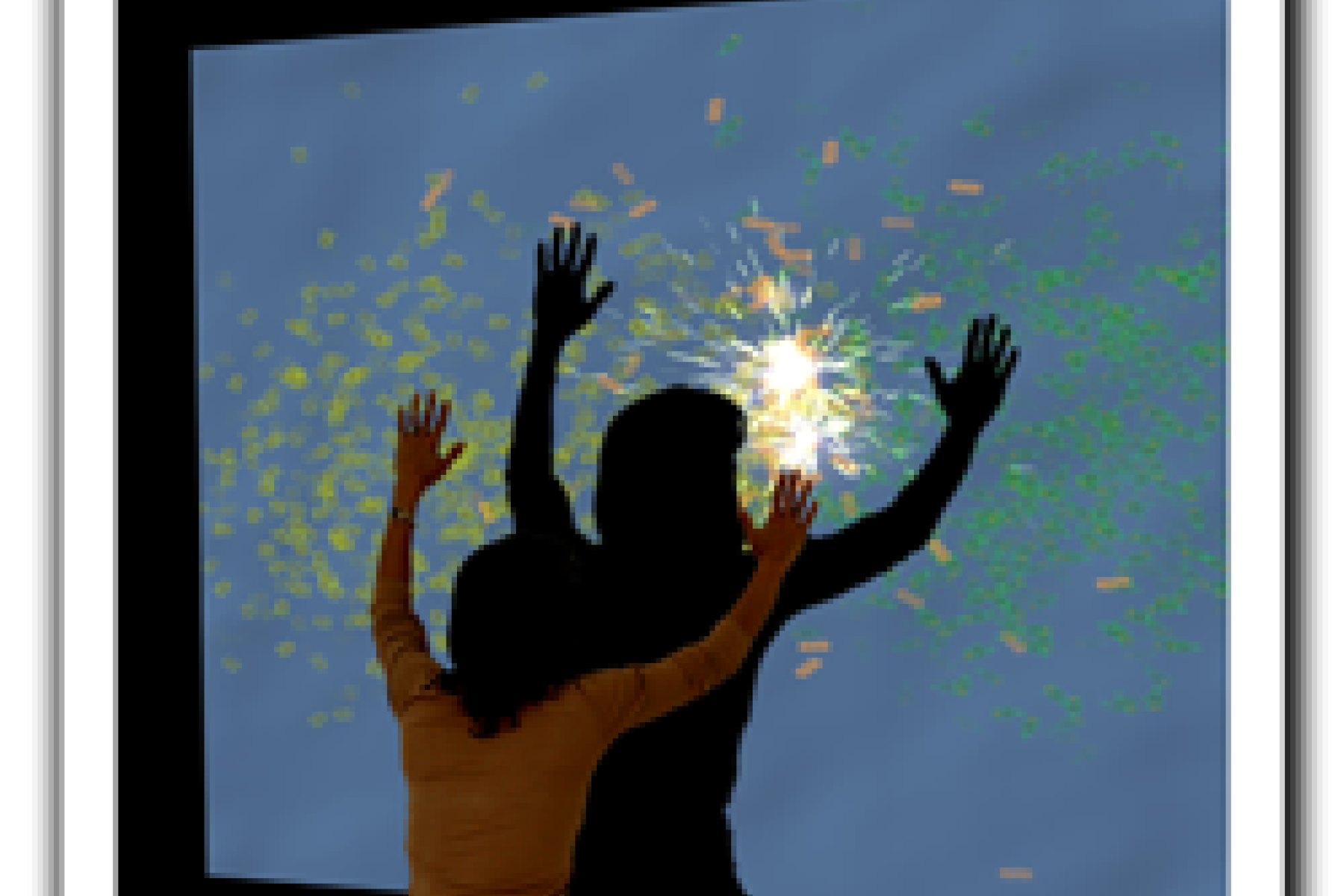
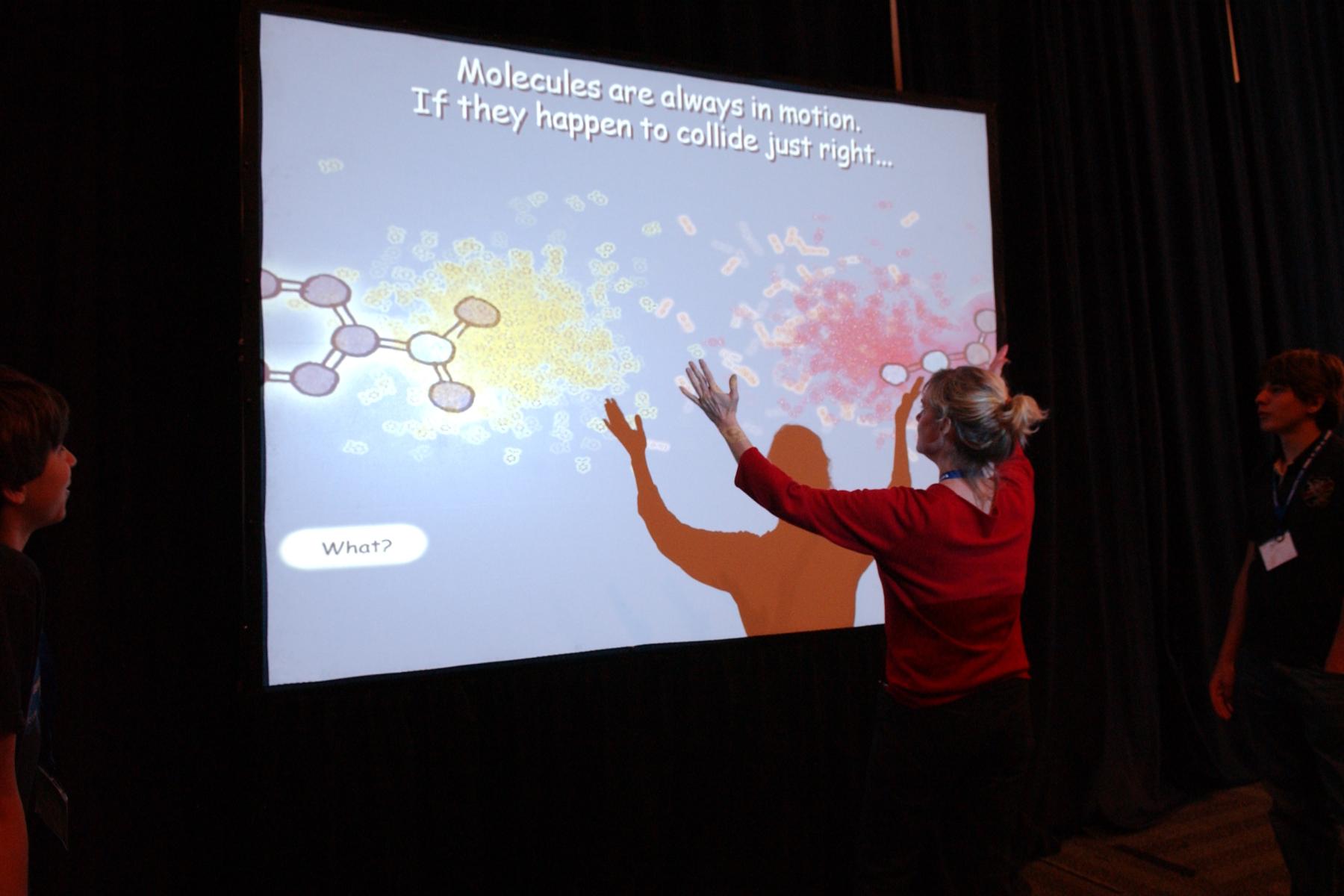
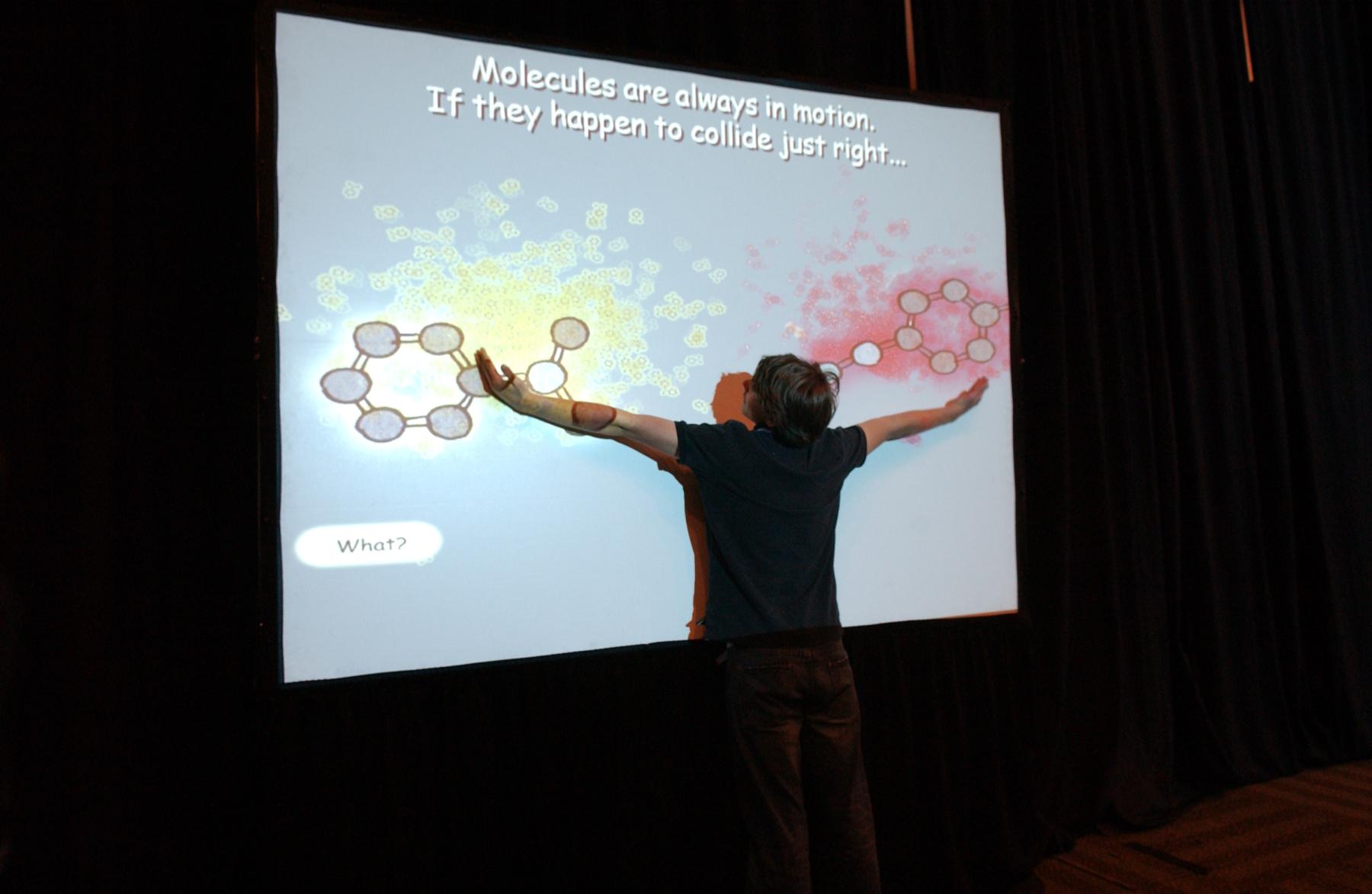
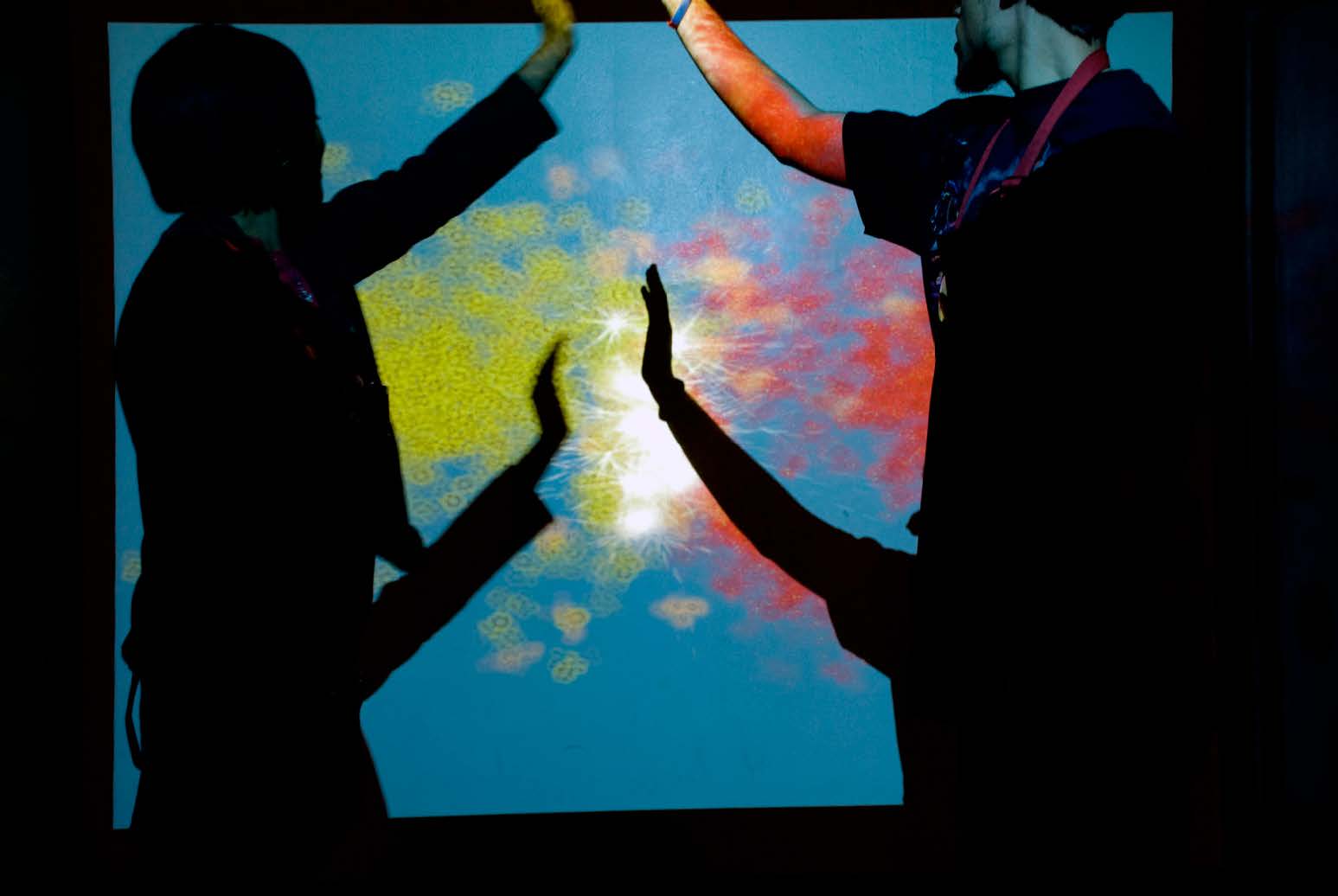
Mixing Molecules is a full-body immersive simulation demonstrating the collision of molecules at the nanoscale. The digital interface allows visitors to use their shadows to "push" animated molecules that are projected onto a screen in a darkened room. Visitors can manipulate the collsion of the molecules, speeding or slowing the formation of new compounds. The piece demonstrates the connection between the nanoscale - where individual molecules collide with each other - and the macroscale where many small random collisions appear as one larger, consistent motion.
DESCRIPTION
Mixing Molecules is a full-body immersive simulation demonstrating the collision of molecules at the nanoscale. The digital interface allows visitors to use their shadows to "push" animated molecules that are projected onto a screen in a darkened room. Visitors can manipulate the collsion of the molecules, speeding or slowing the formation of new compounds. The piece demonstrates the connection between the nanoscale - where individual molecules collide with each other - and the macroscale where many small random collisions appear as one larger, consistent motion.
OBJECTIVES
BIG IDEA
Molecules are always in motion. When they happen to collide, they can react to form bigger molecules.
NANO CONTENT MAP
Nanometer-sized things are very small, and often behave differently than larger things do.
Credits
This product was created by Mine-Control working with the New York Hall of Science for the NISE Network Visualization Lab; contact www.mine-control.com
This exhibit is not included in the NISE Network's Creative Commons license.
Developed for the NISE Network with funding from the National Science Foundation under Award Numbers 0532536 and 0940143. Any opinions, findings, and conclusions or recommendations expressed in this product are those of the authors and do not necessarily reflect the views of the Foundation.
This linked product was created by another institution (not by the NISE Network). Contact owning institution regarding rights and permissions.