
DESCRIPTION
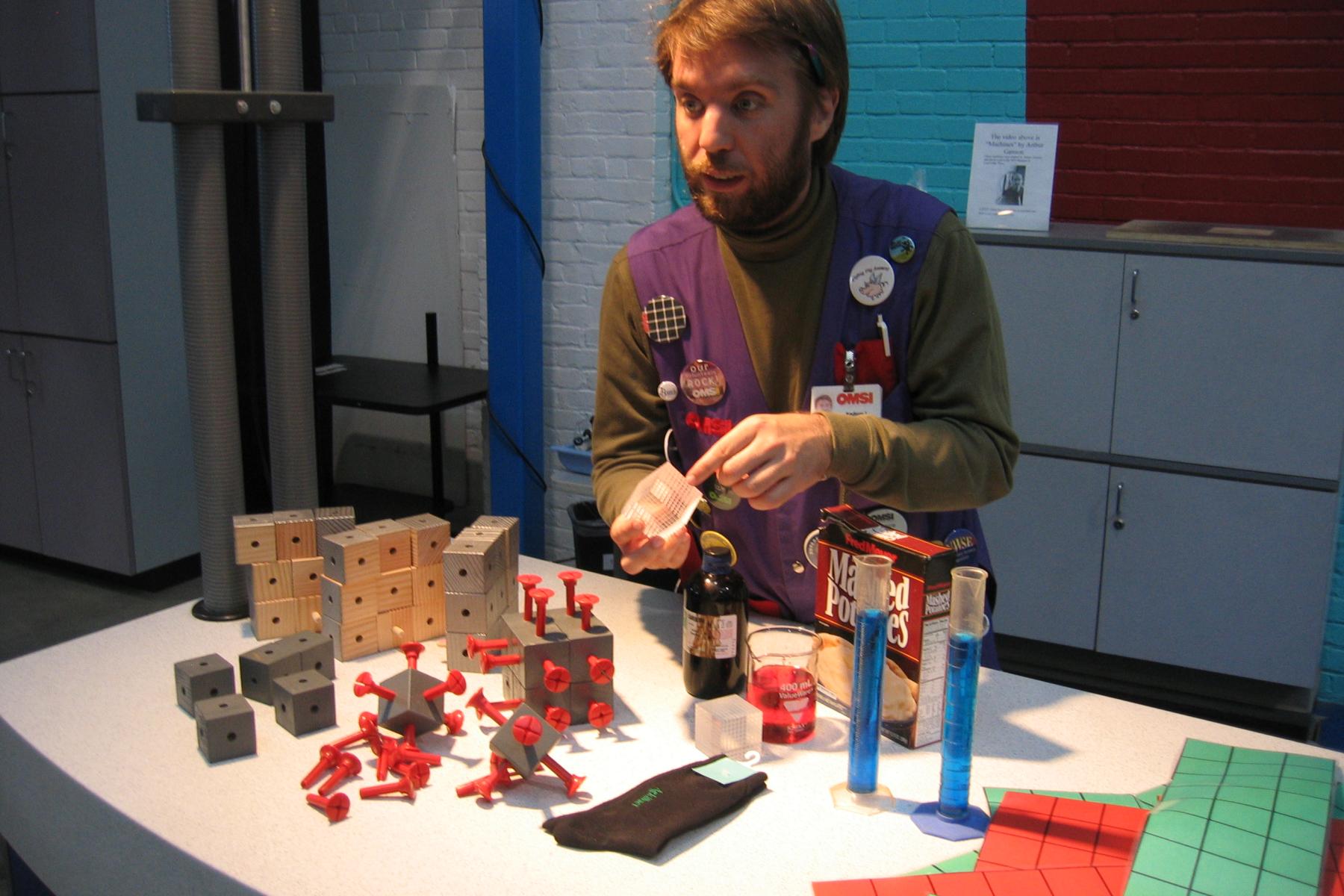
This is a cart demonstration activity about how nanoparticles behave differently, in part because they have a high surface area:volume ratio. Visitors learn that smaller particles have a much higher proportion of their atoms on the surface. Visitors unfold paper cubes, drop alka-seltzer in water, turn potatoes black with iodine, and see fireballs to understand how surface area changes as you get small.
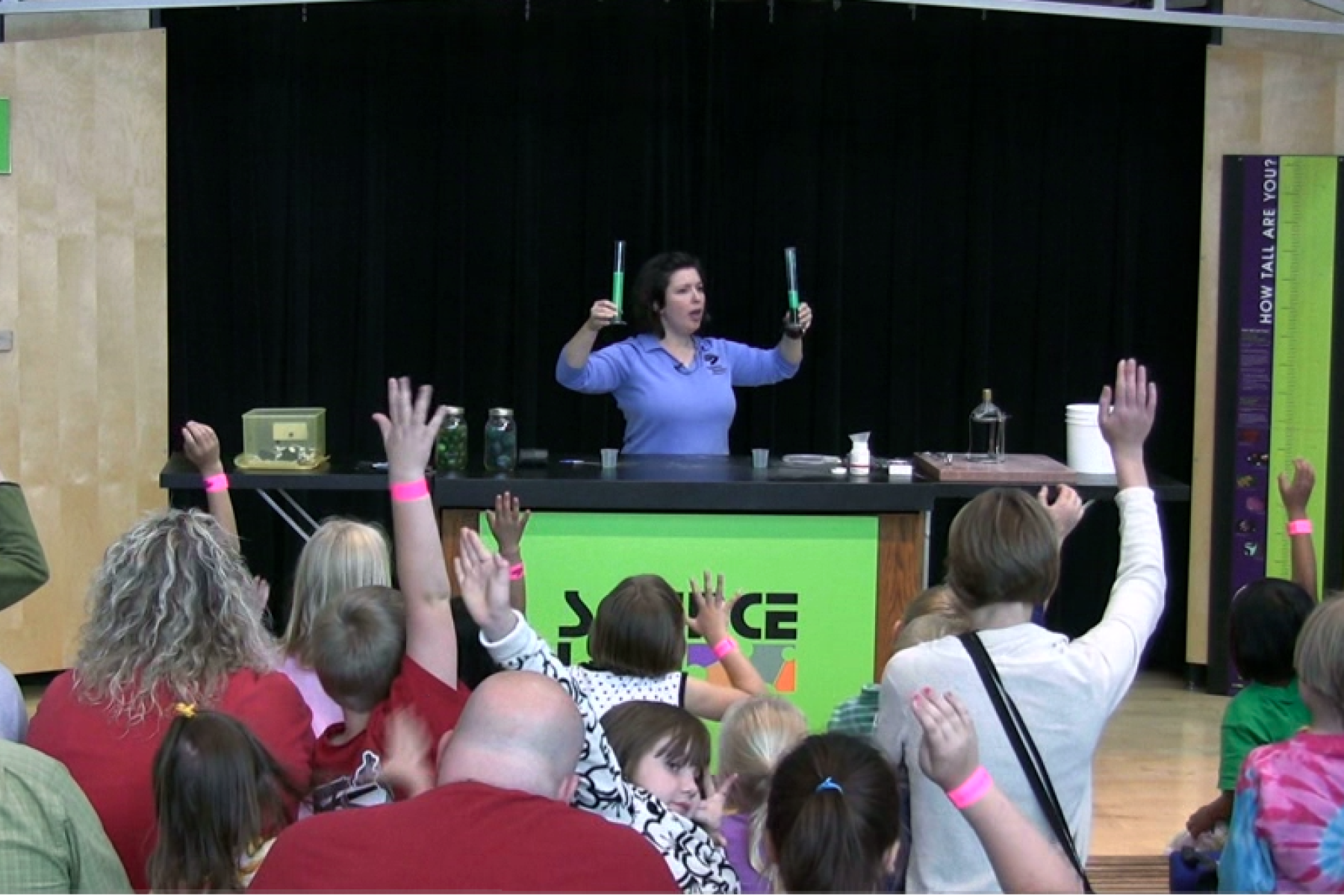
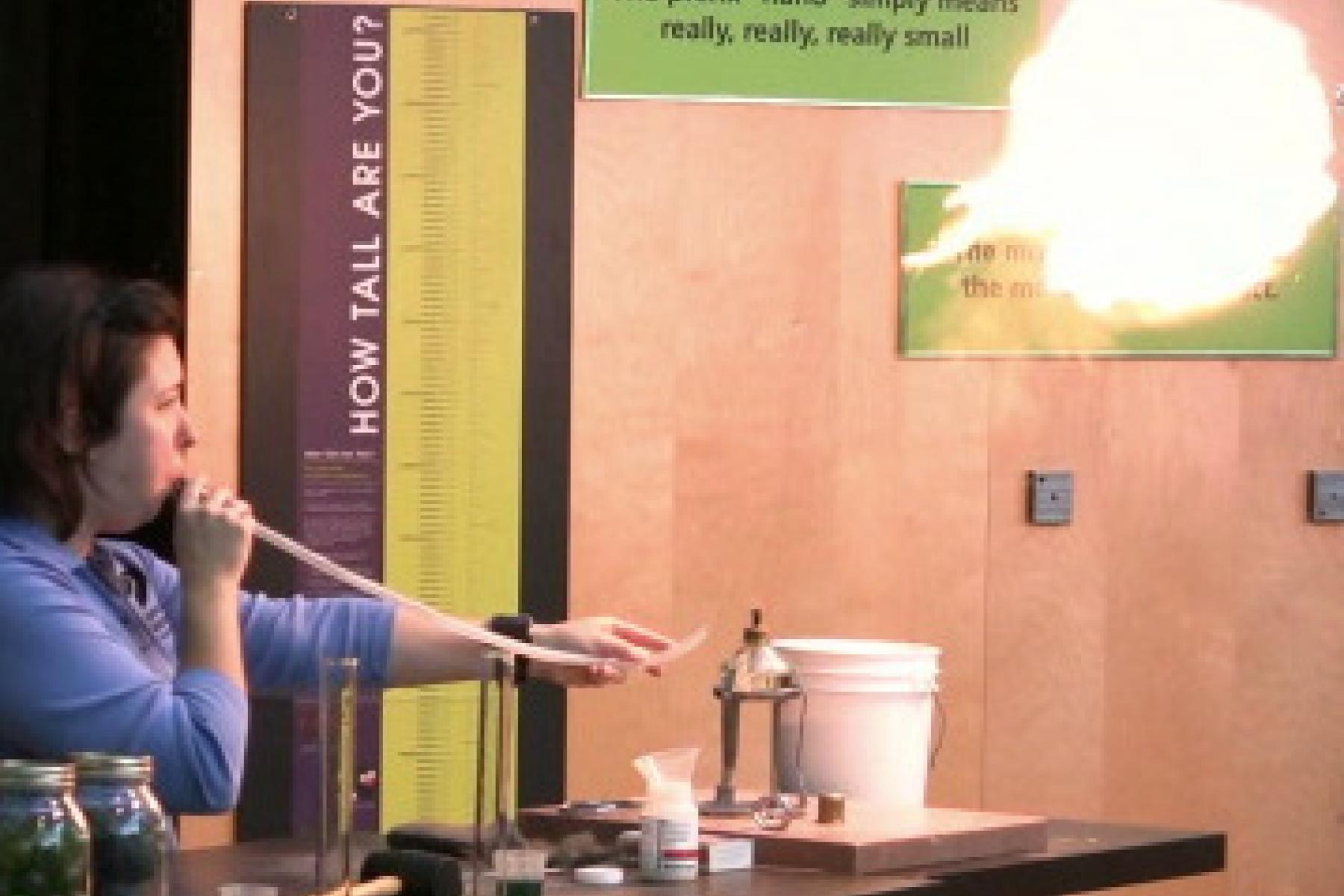
Also included is a script for a large group version of the Surface Area program. In this interactive stage presentation, audience members are measured in nanometers and demonstrate the effectiveness of "nano" silver in killing germs. Other highlights include a fireball that starts and ends the show. Visitors learn that nanoparticles behave differently, in part because they have a high surface area to volume ratio.
DESCRIPTION
This is a cart demonstration activity about how nanoparticles behave differently, in part because they have a high surface area:volume ratio. Visitors learn that smaller particles have a much higher proportion of their atoms on the surface. Visitors unfold paper cubes, drop alka-seltzer in water, turn potatoes black with iodine, and see fireballs to understand how surface area changes as you get small.
Also included is a script for a large group version of the Surface Area program. In this interactive stage presentation, audience members are measured in nanometers and demonstrate the effectiveness of "nano" silver in killing germs. Other highlights include a fireball that starts and ends the show. Visitors learn that nanoparticles behave differently, in part because they have a high surface area to volume ratio.
TRAINING VIDEOS
OBJECTIVES
BIG IDEA
Nanoparticles have much more surface area than macro-particles, giving them different properties.
LEARNING GOALS
Nanotechnology is very small.
Nanomaterials have different properties than other materials.
One reason for these different properties is an increase in surface area.
NANO CONTENT MAP
Nanometer-sized things are very small, and often behave differently than larger things do.
Credits
Cart Demonstration developed by Oregon Museum of Science and Industry.
Stage version developed by Science Museum of Minnesota.
Developed for the NISE Network with funding from the National Science Foundation under Award Numbers 0532536 and 0940143. Any opinions, findings, and conclusions or recommendations expressed in this product are those of the authors and do not necessarily reflect the views of the Foundation.
Creative Commons Attribution Non-Commercial Share Alike 3.0 United States (CC BY-NC-SA 3.0 US).
View more details

NISE Network products are developed through an iterative collaborative process that includes scientific review, peer review, and visitor evaluation in accordance with an inclusive audiences approach. Products are designed to be easily edited and adapted for different audiences under a Creative Commons Attribution Non-Commercial Share Alike license. To learn more, visit our Development Process page.