
DESCRIPTION
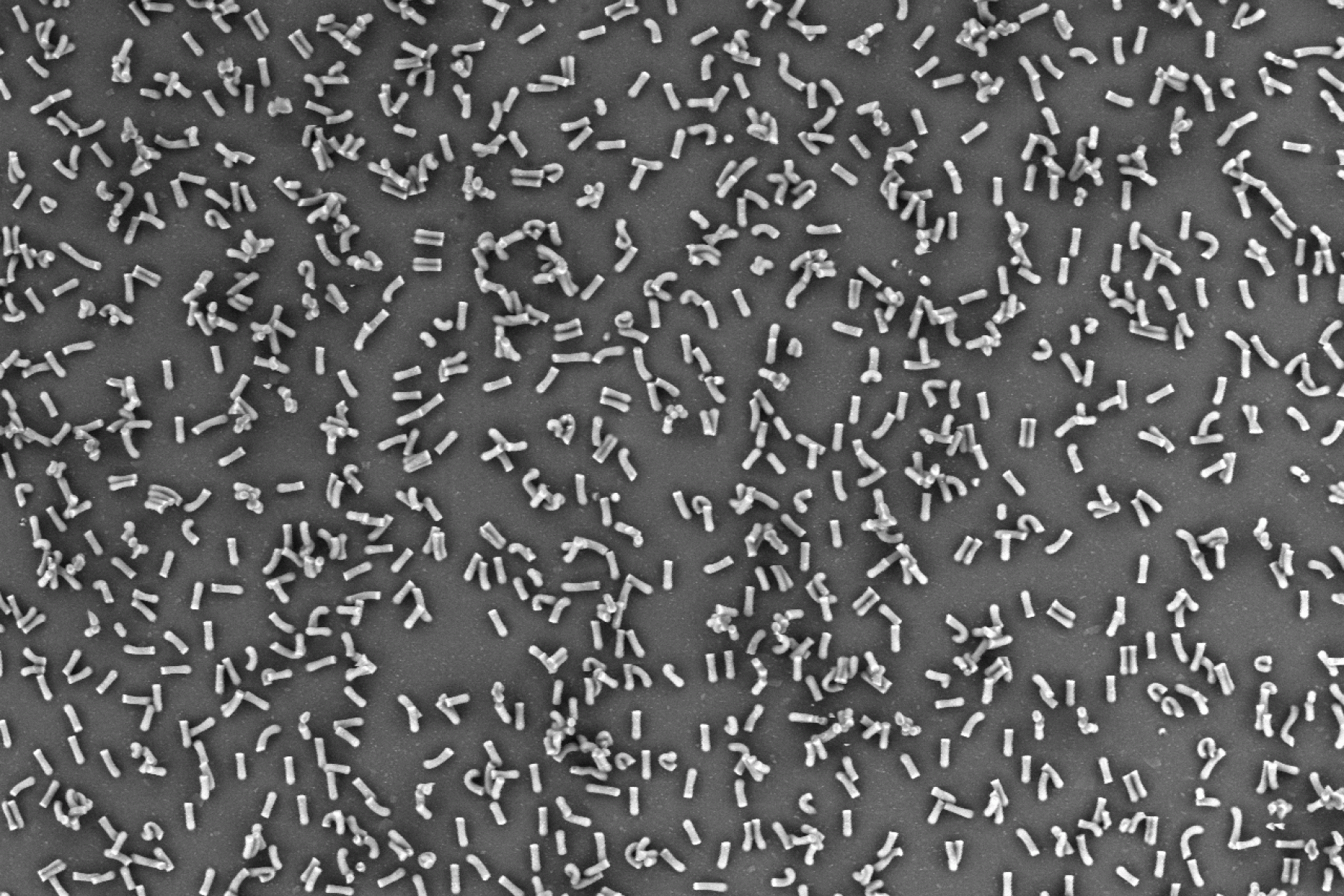
This hands-on activity will guide you in making a synthetic gecko tape with micron sized hairs that mimics that behavior of the gecko foot. The process is called "nanomolding." Also described is an easy setup using Legos for testing how much weight the gecko tape can hold. Significant amount of research is ongoing in the field of synthetic Gecko tape due to its wide variety of applications. This program gives a glimpse of one of the methods used by researchers for making a synthetic gecko tape and its properties.
DESCRIPTION
This hands-on activity will guide you in making a synthetic gecko tape with micron sized hairs that mimics that behavior of the gecko foot. The process is called "nanomolding." Also described is an easy setup using Legos for testing how much weight the gecko tape can hold. Significant amount of research is ongoing in the field of synthetic Gecko tape due to its wide variety of applications. This program gives a glimpse of one of the methods used by researchers for making a synthetic gecko tape and its properties.
TRAINING VIDEOS
OBJECTIVES
BIG IDEA
The toes of a gecko are divided into nanoscale hair-like structures. When a gecko places its foot on the wall and curls its toes, these nanoscale structures interact with the wall on the atomic level. The forces (van-der-waals forces) between the nano-structured hairs of the gecko foot and the atoms of the wall are strong enough to hold up the gecko. Scientists are working to make materials that use gecko-like nano-structures for adhesion.
LEARNING GOALS
Define biomimicry: Imitating nature’s best ideas to solve human problems
Recognize that gecko feet have structures small enough to be measured in nanometers, or billionths of a meter, that allow them to climb vertical surfaces as well as hang upside down on ceilings.
Understand that nanoscale hairs are able to interact with the atoms of the surface the gecko is climbing on.
Understand that scientists are researching man-made materials that mimic the properties of the gecko foot.
NANO CONTENT MAP
Nanoscience, nanotechnology, and nanoengineering lead to new knowledge and innovations that weren't possible before.
Credits
Lawrence Hall of Science
Developed for the NISE Network with funding from the National Science Foundation under Award Numbers 0532536 and 0940143. Any opinions, findings, and conclusions or recommendations expressed in this product are those of the authors and do not necessarily reflect the views of the Foundation.
Creative Commons Attribution Non-Commercial Share Alike 3.0 United States (CC BY-NC-SA 3.0 US).
View more details

NISE Network products are developed through an iterative collaborative process that includes scientific review, peer review, and visitor evaluation in accordance with an inclusive audiences approach. Products are designed to be easily edited and adapted for different audiences under a Creative Commons Attribution Non-Commercial Share Alike license. To learn more, visit our Development Process page.