
Search Results
Search & Refine
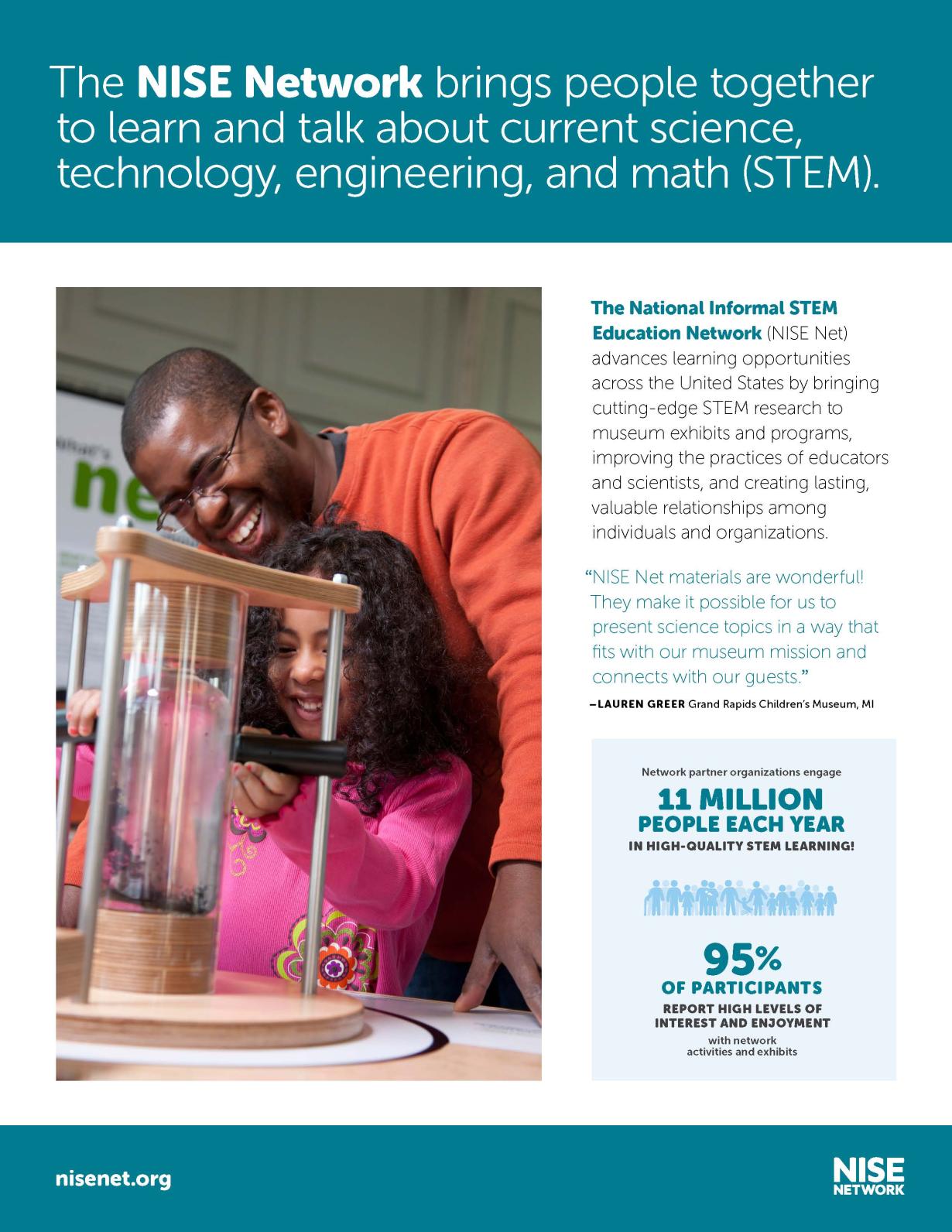
NISE Network Fact Sheets and Brochure for Partners
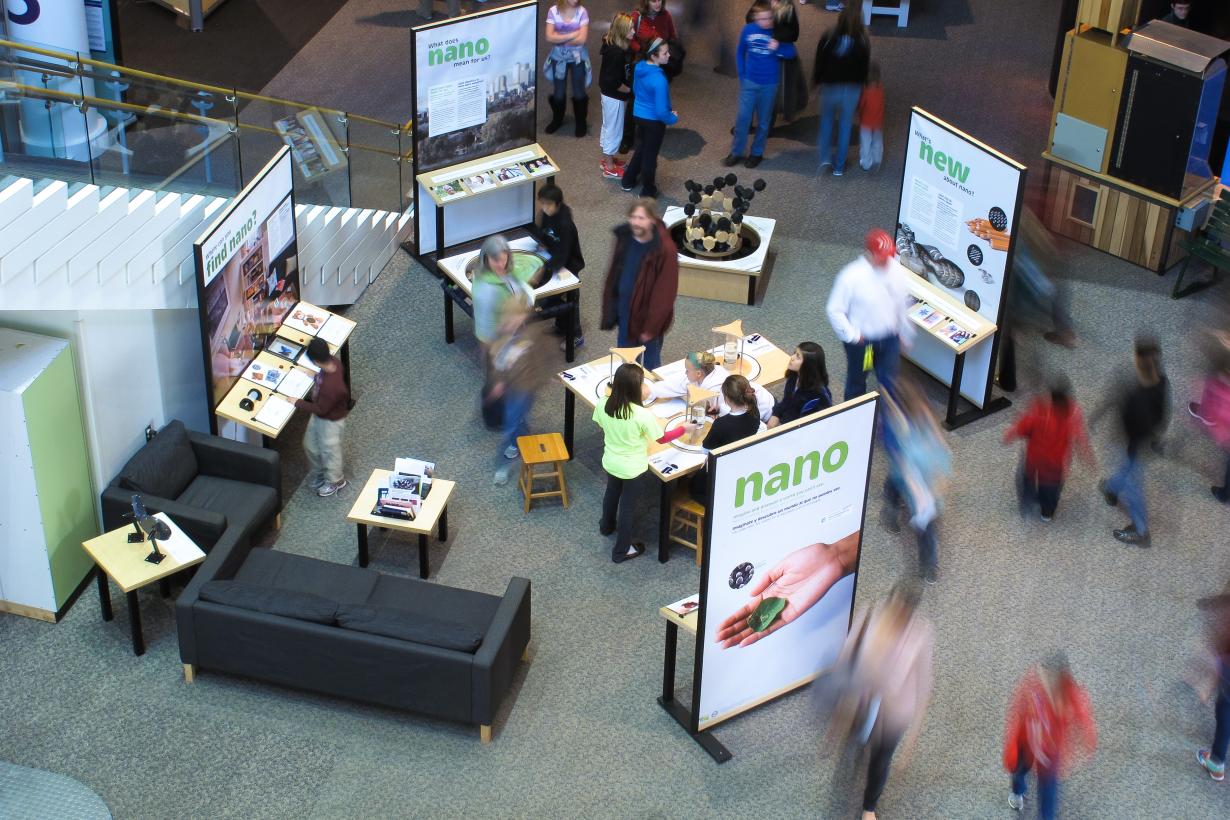
Nano Mini-Exhibition host resources
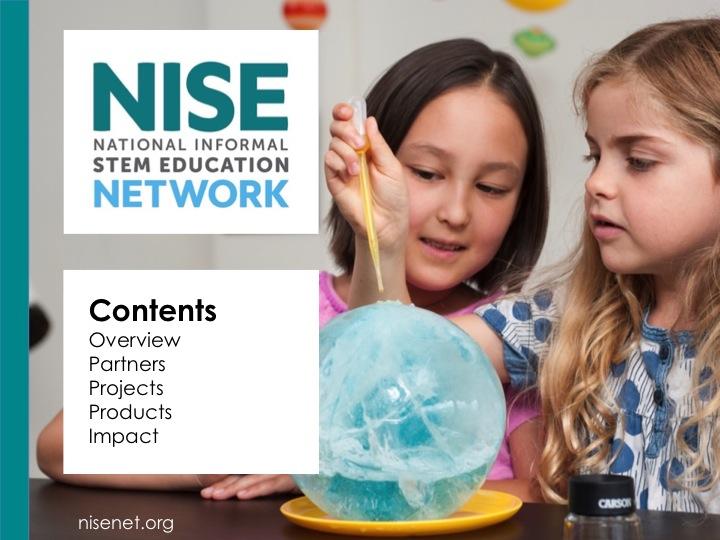
NISE Network General Overview Power Point Presentation Slides
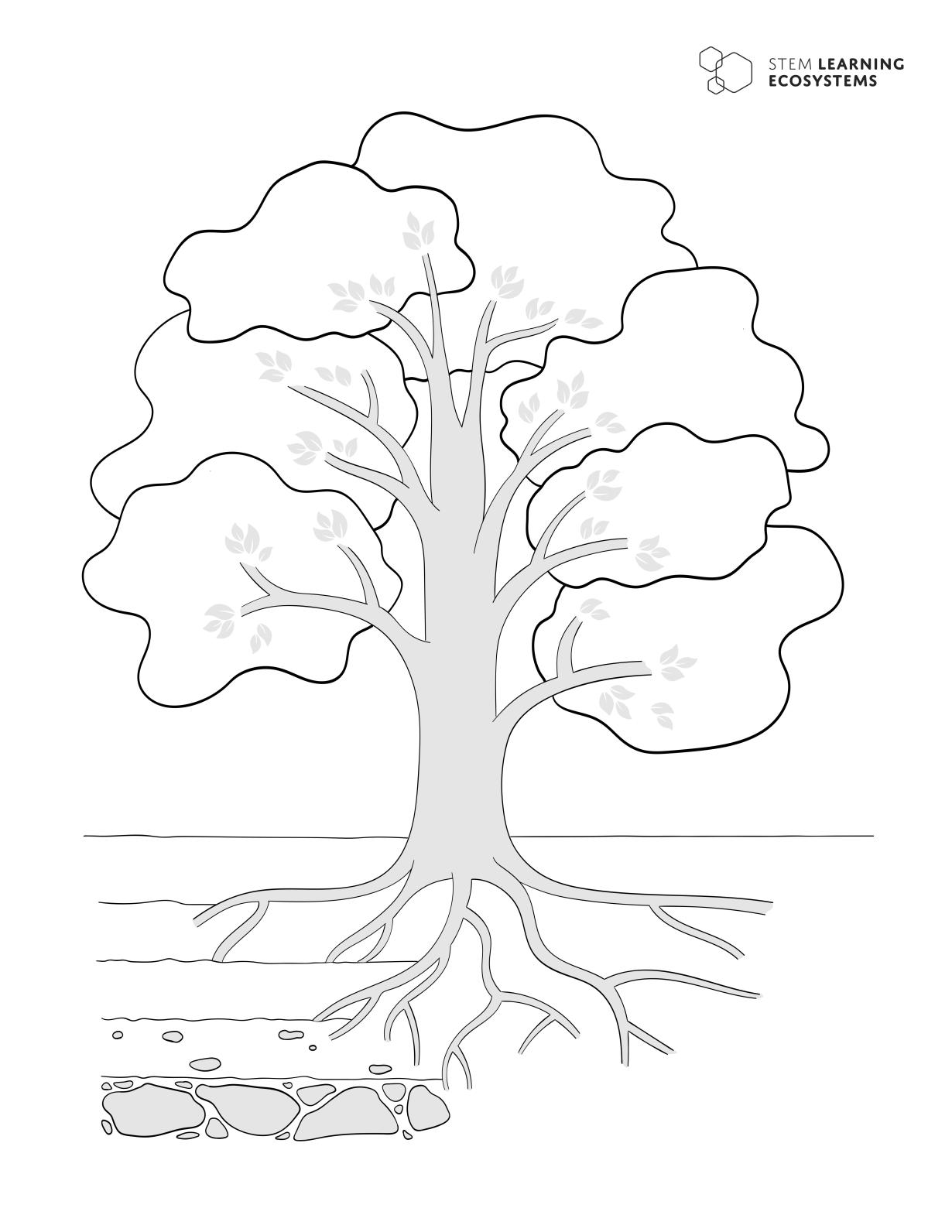
Depict Your Partnership
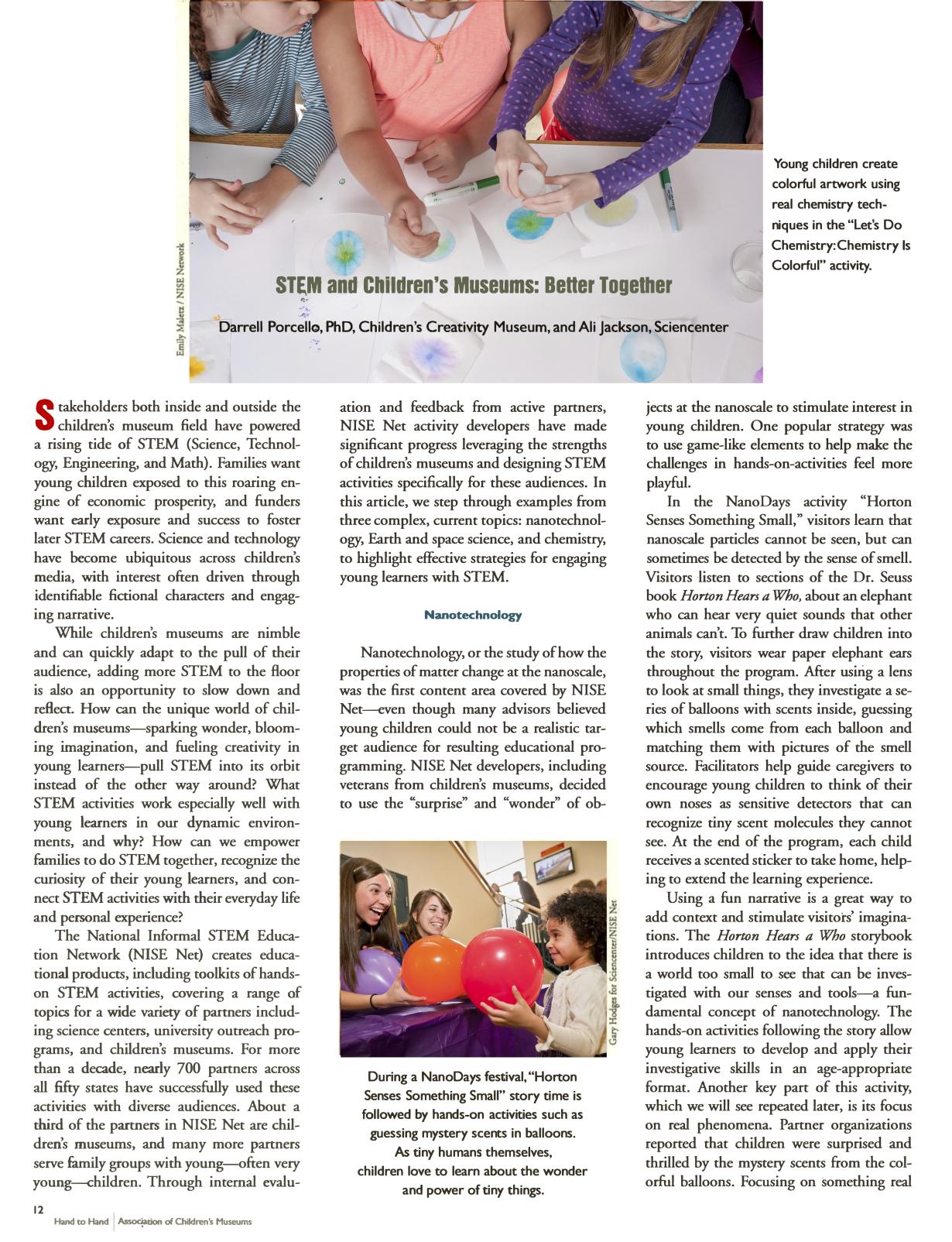
STEM and Children's Museums: Better Together published article
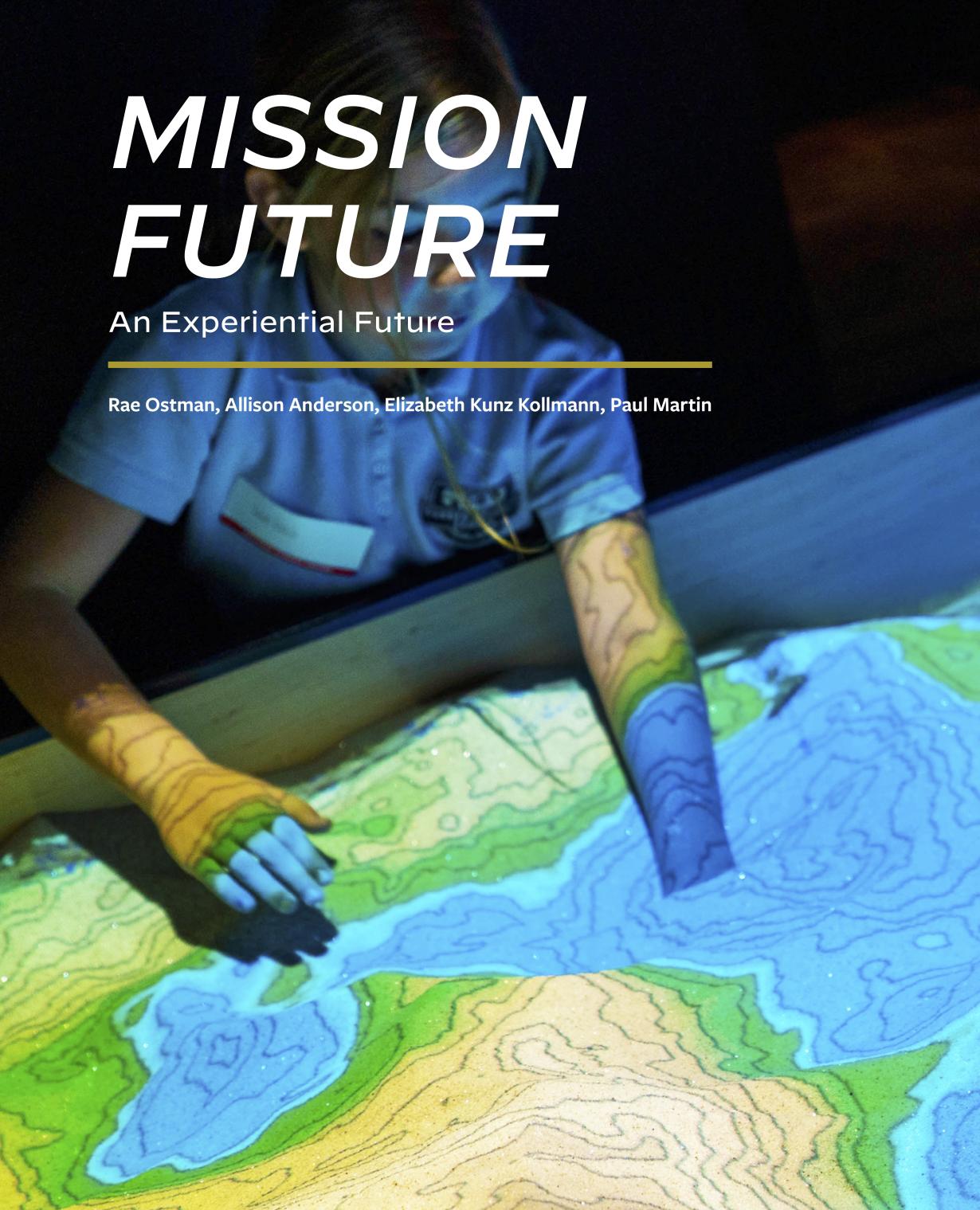
Mission Future: An Experiential Future journal article

What is Learning Conversation Starter
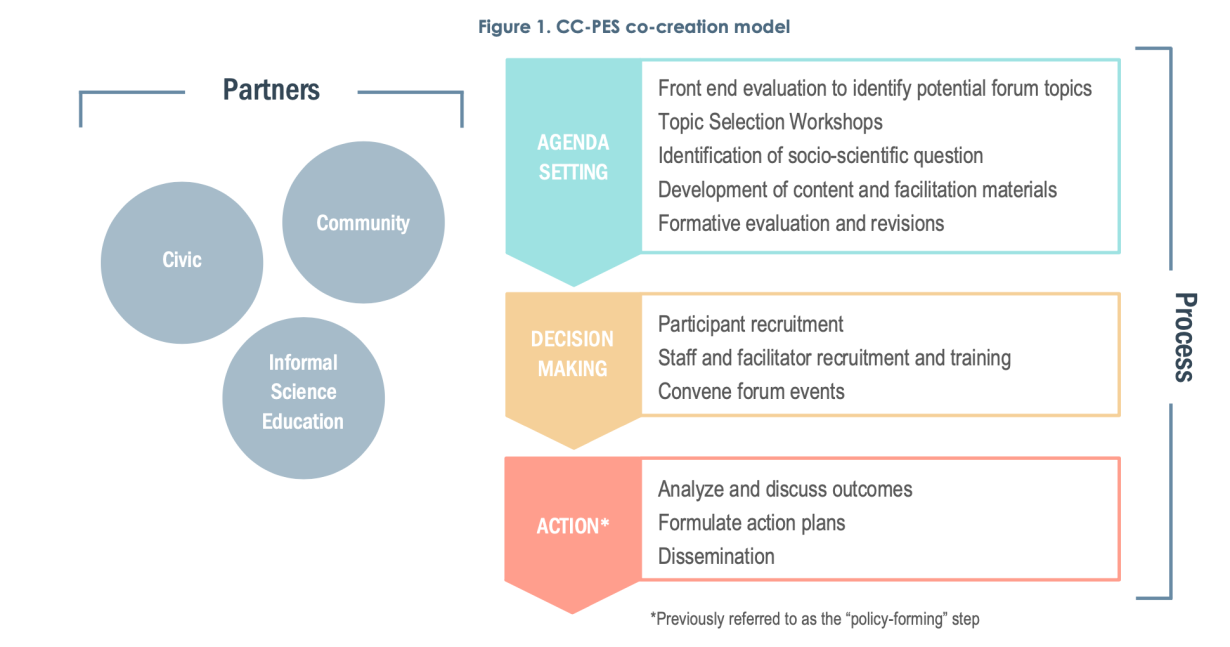
Co-Created Public Engagement with Science (CC-PES) Project Reports
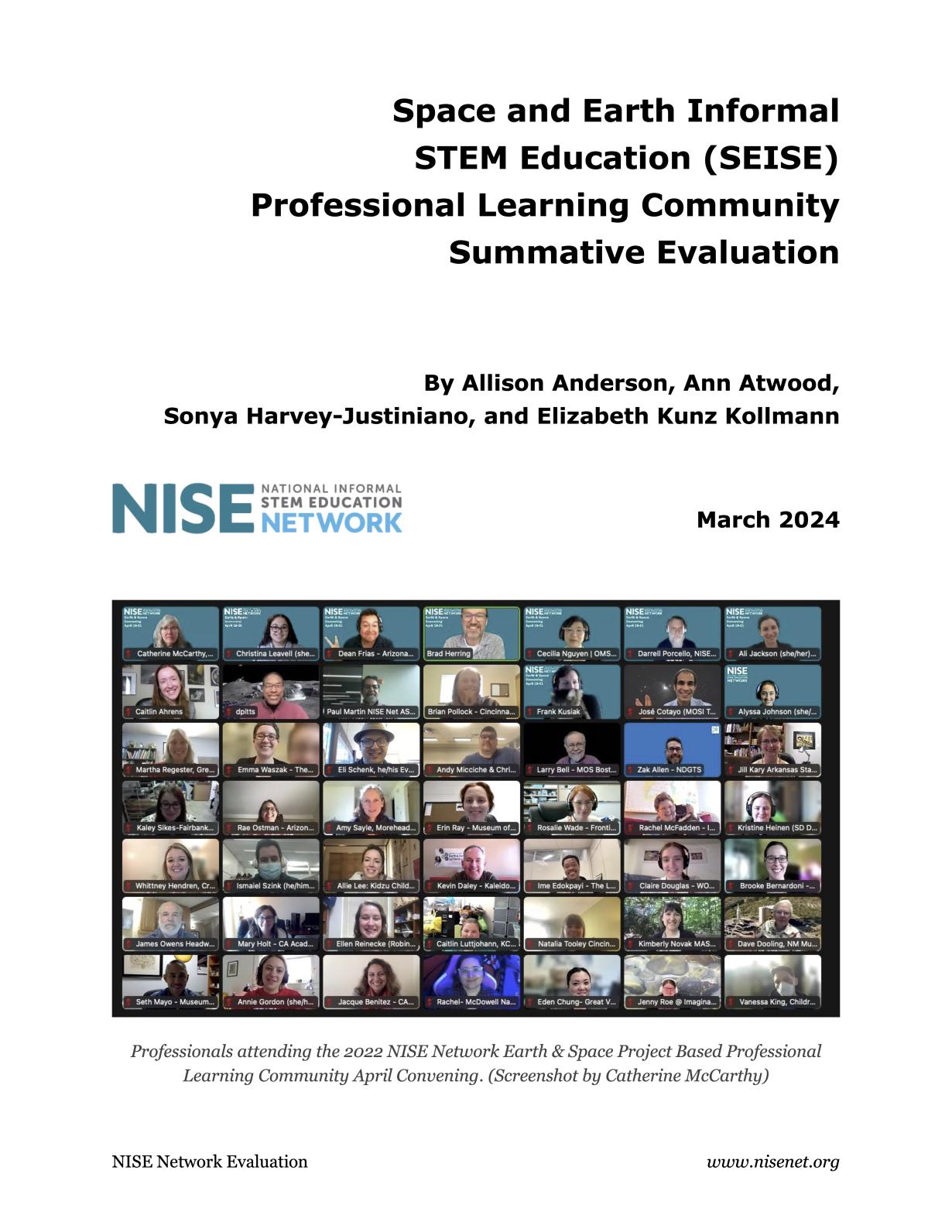
Space Earth and Informal Science Education (SEISE) Professional Learning Community (PLC) Summative Evaluation Summative Evaluation (2021)
Online Workshop: Futures Thinking - Exploring Ideas and Developing Skills to Shape Our World