
DESCRIPTION
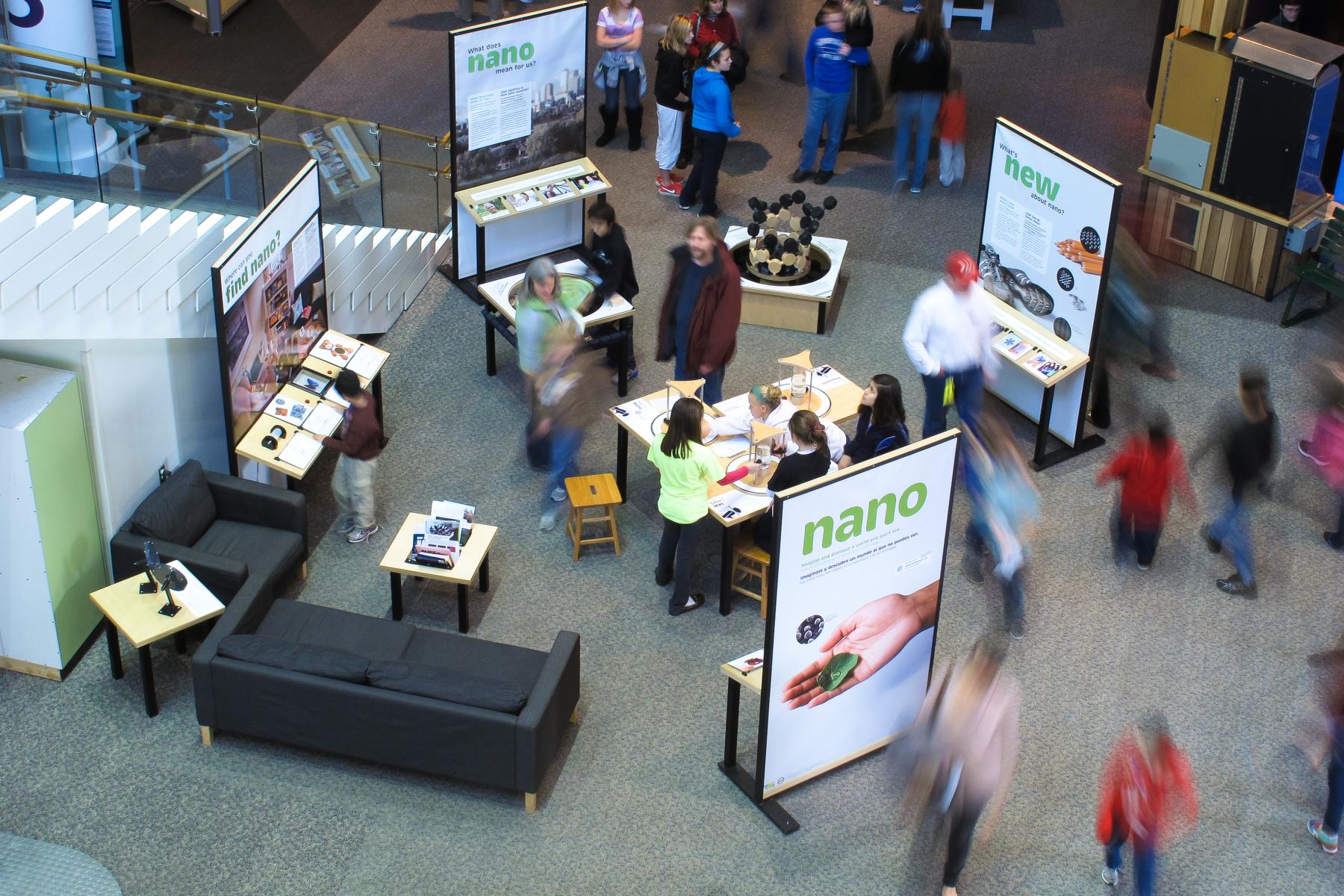
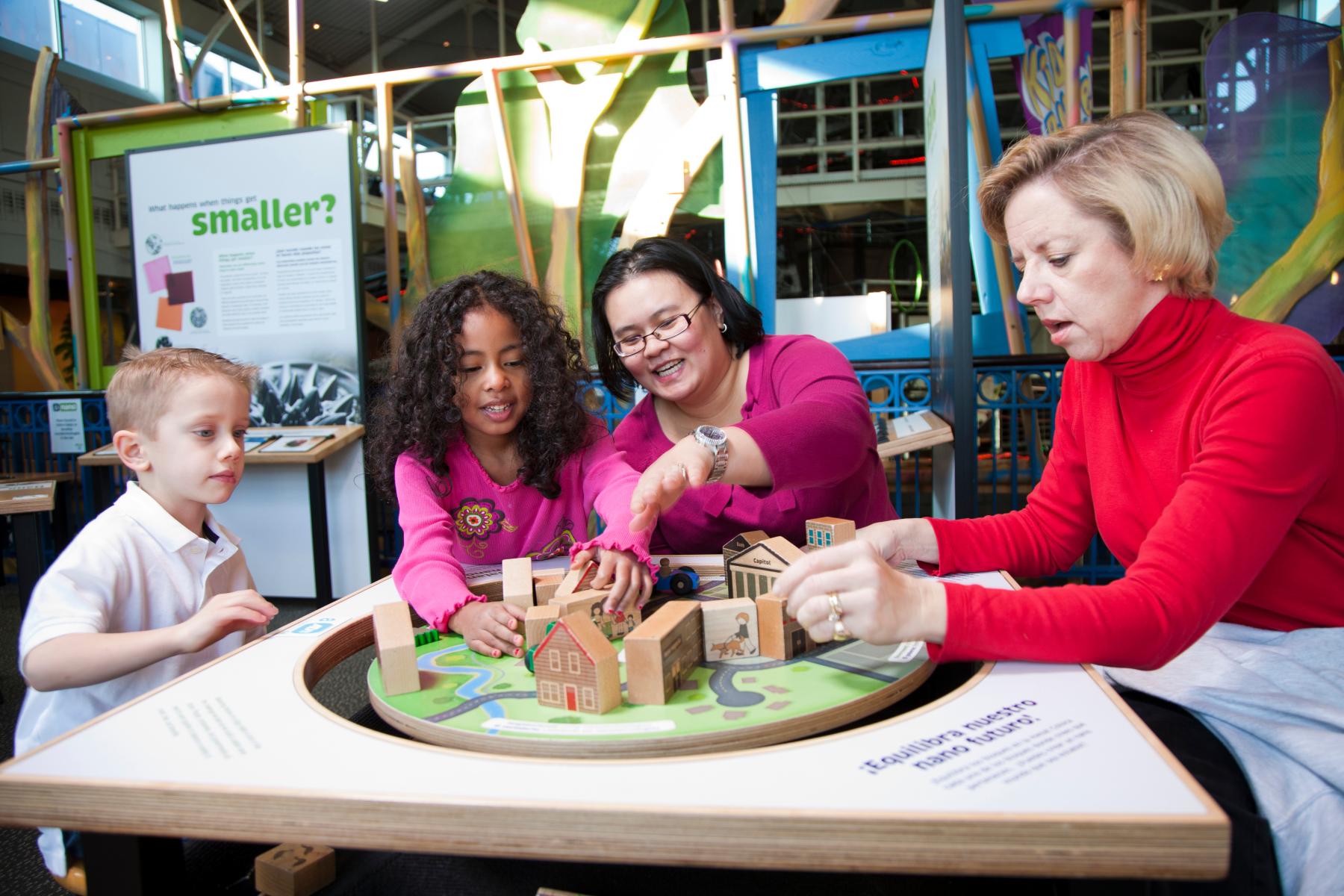
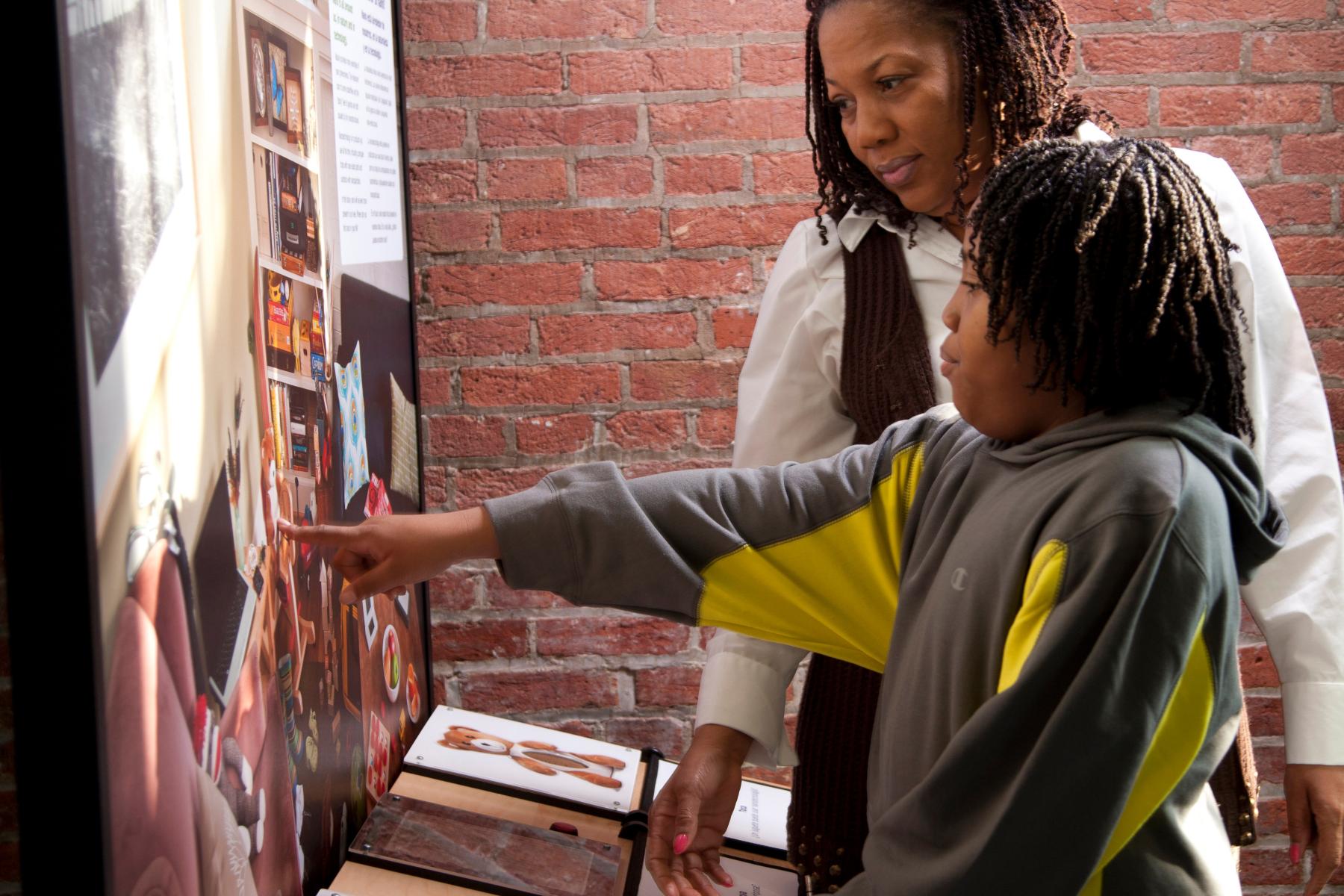
Nano is an interactive exhibition that engages family audiences in nanoscale science, engineering, and technology. Hands-on exhibits present the basics of nanoscience and engineering, introduce some real world applications, and explore the societal and ethical implications of this new technology. Nano was created by the Nanoscale Informal Science Education Network (NISE Network) with support from the National Science Foundation. The Nano exhibition is intended for long-term display in museums across the United States, where it will engage tens of millions of people. 93 copies of Nano were distributed to museum partners free of charge across the United States. The exhibition complements NanoDays events and other NISE Network educational experiences.
Resources:
1) List of Host Resources
2) Description: one page flyer, Guide -Creating a Small-Footprint Exhibition with Big Impact
3) Technical Manual
4) Educator Guide
5) Engaging the Public in Nano: Key Concepts in Nanoscale Science, Engineering, and Technology
6) Audiences: Universal Design Approach, Audio Description, Bilingual Signage
7) Marketing Materials: Color specifications,Tagline, Logos, Fonts, Sample press release
8) Signage and Graphics
9) Books and Reading Boards
10) Evaluation
11) Sample MOU agreement for loaning / ownership


DESCRIPTION
Nano is an interactive exhibition that engages family audiences in nanoscale science, engineering, and technology. Hands-on exhibits present the basics of nanoscience and engineering, introduce some real world applications, and explore the societal and ethical implications of this new technology. Nano was created by the Nanoscale Informal Science Education Network (NISE Network) with support from the National Science Foundation. The Nano exhibition is intended for long-term display in museums across the United States, where it will engage tens of millions of people. 93 copies of Nano were distributed to museum partners free of charge across the United States. The exhibition complements NanoDays events and other NISE Network educational experiences.
Resources:
1) List of Host Resources
2) Description: one page flyer, Guide -Creating a Small-Footprint Exhibition with Big Impact
3) Technical Manual
4) Educator Guide
5) Engaging the Public in Nano: Key Concepts in Nanoscale Science, Engineering, and Technology
6) Audiences: Universal Design Approach, Audio Description, Bilingual Signage
7) Marketing Materials: Color specifications,Tagline, Logos, Fonts, Sample press release
8) Signage and Graphics
9) Books and Reading Boards
10) Evaluation
11) Sample MOU agreement for loaning / ownership
TRAINING VIDEOS
OBJECTIVES
BIG IDEA
Nano focuses on the basics of nanoscience, real world applications of nano, and the societal and ethical implications of this new technology.
NANO CONTENT MAP
Nanometer-sized things are very small, and often behave differently than larger things do.
Scientists and engineers have formed the interdisciplinary field of nanotechnology by investigating properties and manipulating matter at the nanoscale.
Nanoscience, nanotechnology, and nanoengineering lead to new knowledge and innovations that weren't possible before.
Nanotechnologies—and their costs, utility, risks, and benefits—are closely interconnected with society and with our values.
DOWNLOAD FILES
- 1) Nano exhibition List of Host Resources rev 2020 (PDF)
- 2) Description (PDF)
- 2) Description Appendix - Nano mini-exhibition project scope and goals (PDF)
- 2) Description Appendix -One-page flyer (PDF)
- 2) Description Appendix - Nano Exhibition: Creating a Small-Footprint Exhibition with Big Impact (PDF)
- 2) Description Appendix - Application Overview (PDF)
- 3) Technical Manual (PDF)
- 3) Technical Manual Appendix - Routine Upkeep and cleaning Info (PDF)
- 3) Technical Manual Appendix - Receiving and Inspecting Shipments check list (PDF)
- 3) Technical Manual Appendix - Graphic Replacement Instructions (PDF)
- 3) Technical Manual Appendix - Drawings and schematics (ZIP)
- 4) Educator Guide (PDF)
- 4) Educator Guide Appendix -Worksheet answer key for school field trips (DOC)
- 4) Educator Guide Appendix - Student worksheet for school field trips (DOC)
- 5) Key Concepts - Engaging the Public in Nano (PDF)
- 6) Audiences Guide (PDF)
- 6) Audiences Appendix - AD and Braille Label Locations (PDF)
- 6) Audiences Appendix - Audio description script as recorded - English (DOC)
- 6) Audiences Appendix - Audio description script as recorded - English (PDF)
- 7) Marketing Guide (PDF)
- 7) Marketing Appendix - Logos - all logo options in JPG format (ZIP)
- 7) Marketing Appendix - Publicity photos (PDF)
- 7) Marketing Appendix - Logos - texture zipped JPG, AI, PSD (ZIP)
- 7) Marketing Appendix - Logos - black & white H1-4 I1-5 J1 zipped JPG, AI, PSD (ZIP)
- 7) Marketing Appendix - Logos - G1 G2 E5 E6 zipped JPG, AI, PSD (ZIP)
- 7) Marketing Appendix - Logos - F3 F4 F5 zipped JPG, AI, PSD (ZIP)
- 7) Marketing Appendix - Logos - E1 E2 E3 E4 zipped JPG, AI, PSD (ZIP)
- 7 Marketing Appendix) Logos - D1 D2 D3 D4 zipped JPG, AI, PSD (ZIP)
- 7) Marketing Appendix - Logos - A1 A2 A3 A4 A5 zipped JPG, AI, PSD (ZIP)
- 7) Marketing Appendix - Logos - B1 B2 B3 B4 zipped JPG, AI, PSD (ZIP)
- 7) Marketing Appendix - Logos - C1 C2 C3 C4 zipped JPG, AI, PSD (ZIP)
- 7) Marketing Appendix - Marketing ads cs4 (AI)
- 7) Marketing Appendix - Marketing Ads - (AI)
- 7) Marketing Appendix -Marketing posters cs4 (AI)
- 7) Marketing Appendix - Logos - chart of all logo options (PDF)
- 7) Marketing Appendix - Marketing Ads - chart of all ad options (PDF)
- 7) Marketing Appendix - Marketing Ads Images - Folder 2 zipped jpg (ZIP)
- 7) Marketing Appendix - Marketing Ads Images - Folder 1zipped jpg (ZIP)
- 7) Marketing Appendix -Marketing Posters - chart of all poster options (PDF)
- 7) Marketing Appendix - Marketing Posters - all poster options zipped JPG, AI, PSD (ZIP)
- 8) Signage and graphics package (PDF)
- 8) Signage Appendix - Block set for "Balance Our Nano Future" tippy table (PDF)
- 8) Signage Appendix - Blocks for "Balance Our Nano Future" tippy table (PDF)
- 8) Signage Appendix - Reading Boards accompanying Nano mini-exhibition- English (PDF)
- 8) Signage Appendix - Image credits (PDF)
- 9) Books - List of books accompanying Nano mini-exhibition (PDF)
- 9) Books Appendix - Book Avery Label 5160 (DOC)
- 9) Books Appendix - Book Avery Label 5163 (DOC)
- 10) Evaluation - 2011 Formative Evaluation (PDF)
- 10) Evaluation - 2013 Public Impacts Summative Evaluation (PDF)
- 11) MOU Agreement SAMPLE Language - Loan or Transfer 2014 (DOCX)
- 6) • Audiences Appendix - Nano mini-exhibition audio description script as recorded - (Spanish) (PDF)
- 6) • Audiences Appendix - Nano mini-exhibition audio description script as recorded (Spanish) (DOCX)
- 8) Signage Appendix - Reading Boards accompanying Nano mini-exhibition (Spanish) (PDF)
Credits
Science Museum of Minnesota
Developed for the NISE Network with funding from the National Science Foundation under Award Numbers 0532536 and 0940143. Any opinions, findings, and conclusions or recommendations expressed in this product are those of the authors and do not necessarily reflect the views of the Foundation.
Creative Commons Attribution Non-Commercial Share Alike 3.0 United States (CC BY-NC-SA 3.0 US).
View more details

NISE Network products are developed through an iterative collaborative process that includes scientific review, peer review, and visitor evaluation in accordance with an inclusive audiences approach. Products are designed to be easily edited and adapted for different audiences under a Creative Commons Attribution Non-Commercial Share Alike license. To learn more, visit our Development Process page.