
Exhibits
Featured Exhibits and Exhibitions
Browse all Exhibits and Exhibitions


More About Exhibits
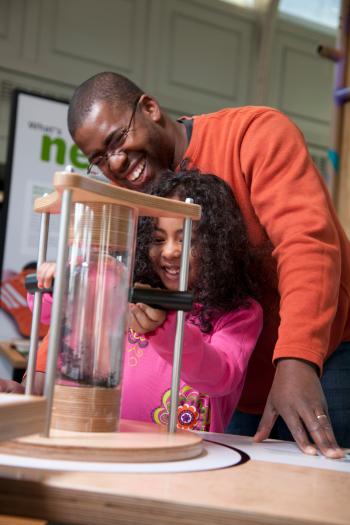
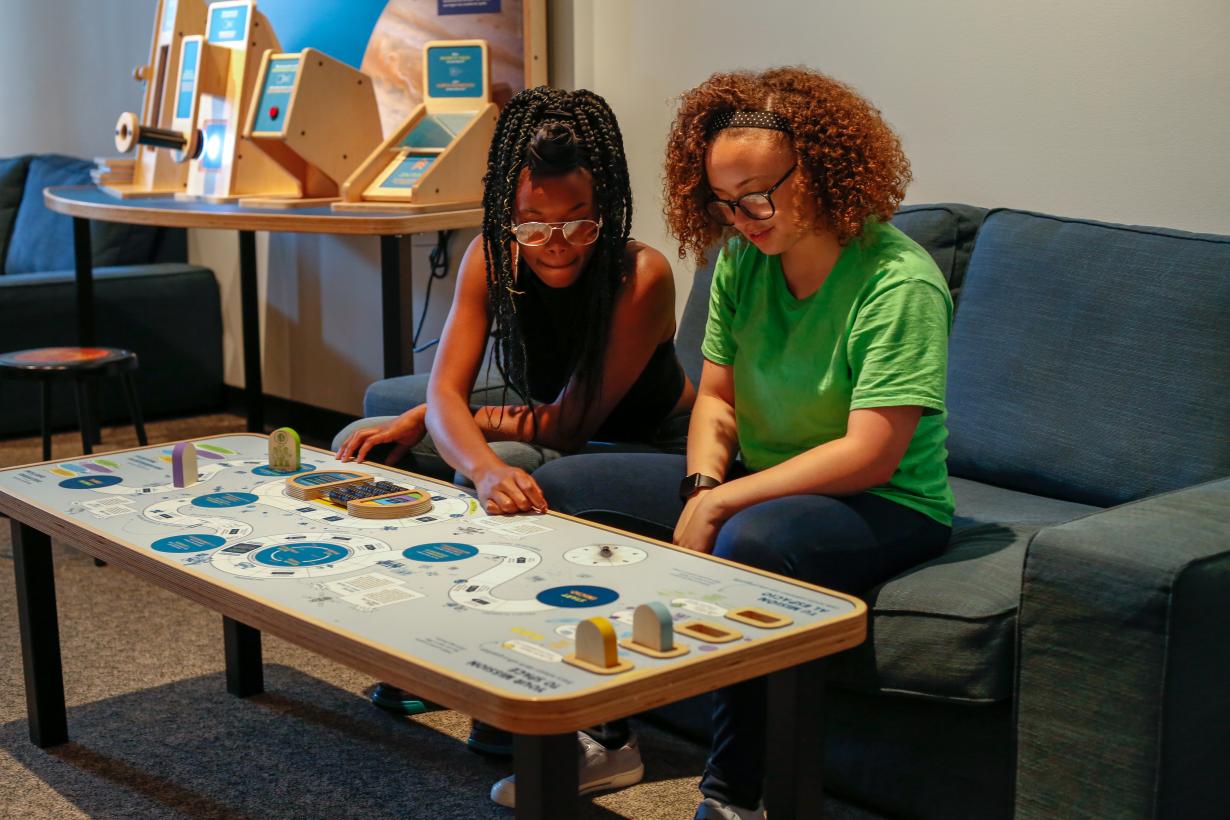
Exhibits are typically unstaffed experiences, designed for visitors to museums and other similar settings. Exhibits may take many forms, including hands-on interactive components, multimedia components, object displays, and graphic panels, or some combination of these elements.
- Traveling Exhibitions Traveling exhibitions are a group of exhibits displayed in museums or similar venues on a temporary basis, through a loan or rental agreement with the owner. Exhibitions are made up of a number of individual exhibit components, usually organized around a theme. They can include hands-on interactive components, multimedia components, object displays, and graphic panels. Exhibits are typically unstaffed experiences, designed for visitors to museums and other similar settings.
- Non-Traveling Exhibits
Non-traveling exhibitions are a group of exhibits, usually organized around a theme, that are installed in museums or similar venues on a long-term basis. Exhibitions can be made up of a number of individual exhibit components, including hands-on interactive components, multimedia components, object displays, and graphic panels. Exhibits are typically unstaffed experiences, designed for visitors to museums and other similar settings.
How can I rent a traveling exhibition?
The NISE Network does not tour traveling exhibitions, however, some of our partners do tour traveling exhibitions for a fee. You can contact the owners of the traveling exhibition and ask if it is available for you to rent. If you cannot find the contact person for a specific traveling exhibition on the website please contact us for assistance and we will attempt to connect you with the owner.
How can I buy an exhibit or exhibition?
The NISE Network does not sell exhibits, however, some of our partners do sell exhibits. If you are interested in renting or buying an exhibit or exhibition you should contact the original creator/owner to see if it is possible for them to fabricate a copy of the exhibit or exhibition for you for a fee. If you cannot find the contact person for a specific exhibition the website, please contact us for assistance.
How can I build my own Earth and space science exhibits?
There are resources from NASA, NOAA, and NISE Network to help you create your own Earth and space science exhibits:
- ViewSpace
- ViewSpace gives you the opportunity to explore our planet, solar system, galaxy, and universe. Provided free with the support of NASA, ViewSpace is developed by a team of scientists, educators, and communication specialists who collaborate to ensure that content is accurate, up-to-date, engaging, relevant, and accessible to a wide audience.
- ViewSpace Museum Resources https://viewspace.org/resources/museum_resources
- ViewSpace Exhibit Labels https://viewspace.org/resources/exhibit_labels
- Earth Information Center Resources
- The Earth Information Center consolidates data on Earth science from across the US federal government. Earth.gov is also the gateway to other interagency cooperative efforts for our planet. Discover why this data matters to us all.
- Earth Information Center: https://earth.gov/visit
- NASA Solar System Treks
- Online, browser-based portals that allow you to visualize, explore, and analyze the surfaces of other worlds using real data returned from a fleet of spacecraft
https://trek.nasa.gov/#
- Online, browser-based portals that allow you to visualize, explore, and analyze the surfaces of other worlds using real data returned from a fleet of spacecraft
- NASA's Eyes
- Eyes on the Solar System, Eyes on Asteroids, Eyes on the Earth, Eyes on Exoplanets
A suite of 3D visualization applications that allows everyone to explore and understand real NASA data and imagery - https://science.nasa.gov/eyes/museums/
- Eyes on the Solar System, Eyes on Asteroids, Eyes on the Earth, Eyes on Exoplanets
- NASA Scientific Visualization Studio
- Produces visualizations, animations, and images in order to promote a greater understanding of Earth and space sciences
https://svs.gsfc.nasa.gov/
- Produces visualizations, animations, and images in order to promote a greater understanding of Earth and space sciences
- NOAA Science on a Sphere
- A room-sized, global display system that projects visualizations of planetary data onto a six foot diameter sphere to help illustrate Earth System science to people of all ages
https://sos.noaa.gov/
https://ceee.colorado.edu/programs/science-sphere-sos - NOAA's SOS Explorer® (SOSx) is a flat-screen version of SOS
https://sos.noaa.gov/sos-explorer/
- A room-sized, global display system that projects visualizations of planetary data onto a six foot diameter sphere to help illustrate Earth System science to people of all ages
- NISE Network Earth & Space exhibits
- The NISE Network has created and distributed copies of these exhibits nationwide. Digital files of exhibit plans, drawings, and signage are available at no charge for museums or educational institutions who wish to build their own copies or adapt these exhibits for their own use; most of these materials can be downloaded.
- Sun, Earth, Universe Exhibition Host Resources
https://www.nisenet.org/catalog/sun-earth-universe-exhibition-host-resources - Build a Human Habitat on Mars Exhibit Host Resources
https://www.nisenet.org/marshabitat
How can I build my own nano exhibit?
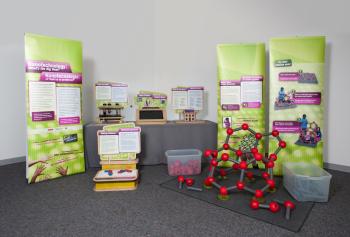
The NISE Network has created a variety of exhibits on nano science, technology, and engineering. Digital files of exhibit plans, drawings, and signage are available at no charge for museums or educational institutions who wish to build their own copies or adapt these exhibits for their own use; most of these materials can be downloaded directly from the exhibits listed on the website.
Educational products created by the NISE Network are created under a Creative Commons attribution non-commercial share-alike license allowing other nonprofit institutions to use and adapt these materials. All exhibit and media products labeled on the website as "NISE NET PRODUCT" fall under this Creative Commons license; please note that products labeled "LINKED PRODUCT" have been created by another institution and you must contact the owning institution regarding rights and permissions.
Please see the section below on posters, images, graphics and multimedia that could be useful when creating your own exhibits.
Posters, Signage, and Images for exhibits:
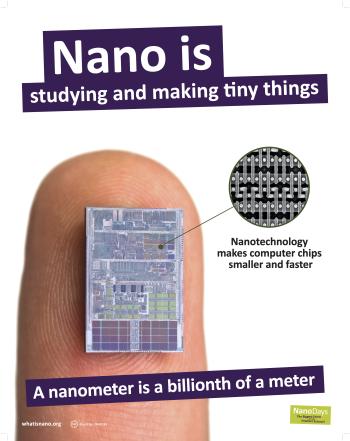
The NISE Network has created posters, signage, and images that may be useful when developing your own exhibits or exhibition gallery; NISE Network educational products can be used under a Creative Commons attribution non-commercial share-alike license.
Nanoscale science posters and graphics:
- Nano Museum Labels (Graphic Signs)
- Nano Spot graphic labels
- Nano & Society Posters
- NanoDays Key Concepts Posters
- How Small is Nano book and poster
- NISE Network image collection
Scale ladders and Zoom Posters:
- Scale Ladder graphics
- Zoom Into a Butterfly Wing poster
- Zoom Into a Computer Chip posters
- Zoom Into the Human Bloodstream poster
- Combined Zoom Poster: Everything Is Made of Atoms - Butterfly, Bloodstream, Computer Chip
- Zoom into a Pencil Line of Graphene with an Atomic Force Microscope (AFM) - Illustration
More graphics and imagery:
Multimedia and videos for exhibits:
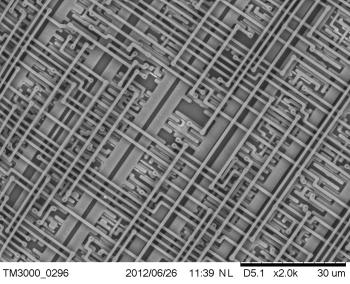
The NISE Net has created many videos and other multimedia that may be useful when developing your own exhibits or exhibition gallery; NISE Network educational products can be used under a Creative Commons attribution non-commercial share-alike license.
- public whatisnano.org website can be used with public visitors
- DIY Nano App that can be used with iPads
- Zoom into a Blue Morpho Butterfly video
- Zoom into a Lotus Leaf video
- Nanomedicine Explorer Website and DVD
- Other educational videos for public audiences
Professional Learning Resources
Browse all Professional Learning for Educators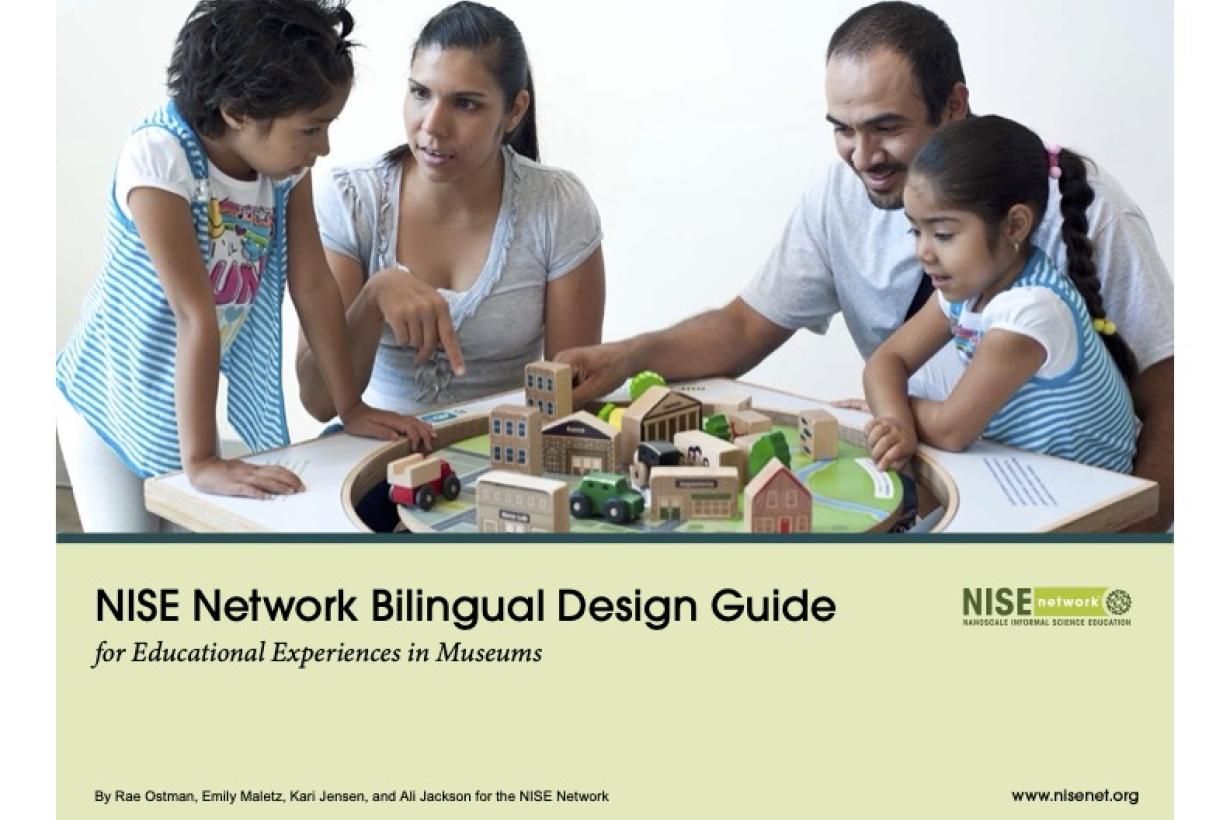
Bilingual Design Guide
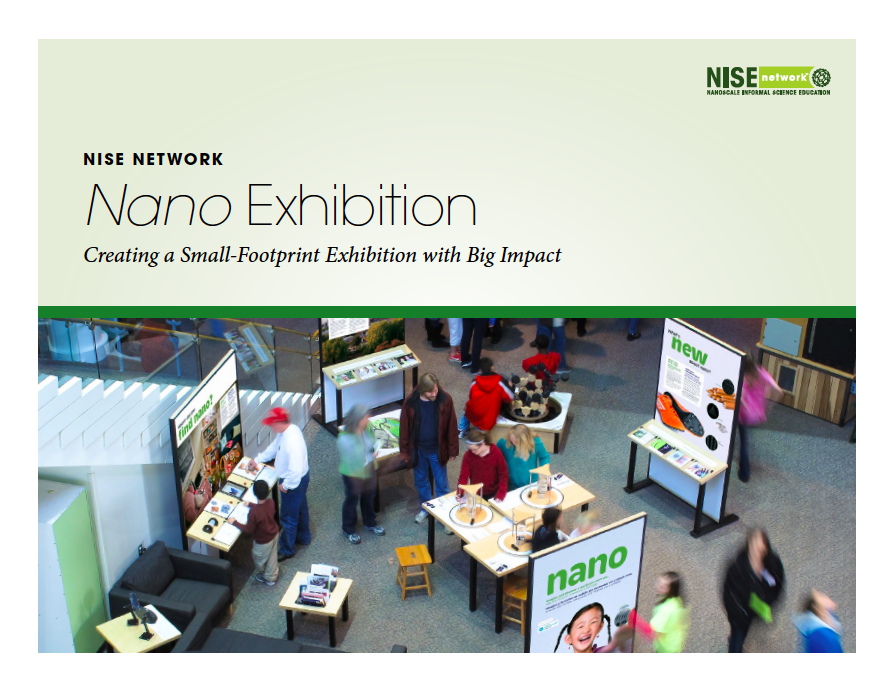
NISE Network Guide - Nano Exhibition: Creating a Small-Footprint Exhibition with Big Impact