
2025 marks the 100th anniversary of the largest children’s museum in the world, The Children’s Museum of Indianapolis! Providing out of this world experiences on a daily basis that captivate and inspire the minds of all ages, it should be no surprise to find many actual “out of this world” experiences that engage visitors in the science and excitement of space exploration. A permanent exhibit called "Beyond Spaceship Earth" opened in 2016, and continues to take visitors on an interactive journey through the International Space Station (ISS). The Schaefer Planetarium and Space Object Theater hosts multiple shows every day that highlight the Apollo missions, include real artifacts, and connect locally to stories like that of Dee O’Hara, Indiana native and first aerospace nurse. In 2022, the museum even hosted a student Q&A session with astronaut Dr. Kjell Lindgren, who at the time was still living and working on the ISS.
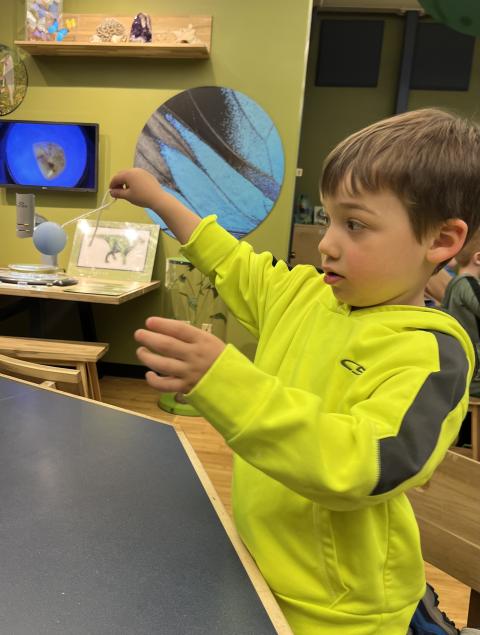
You can also find some of the NISE Network’s Explore Science: Earth and Space toolkit activities around the Corteva Agriscience STEMLab, where the museum hosts many longer, classroom-style programs. In one of these activities, "Seeing Stars," participants learn about some of the ancient myths behind constellations, experiment with a telescope, and create a simple projector to take home. Another wonderful STEMLab presentation is called "Out of this World Engineering." In this classroom-type program, participants learn about three real problems facing individuals living on the ISS, and are charged with considering how they would try to solve the issues while working together as a group.
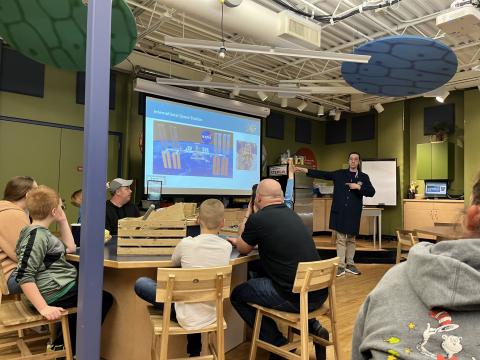
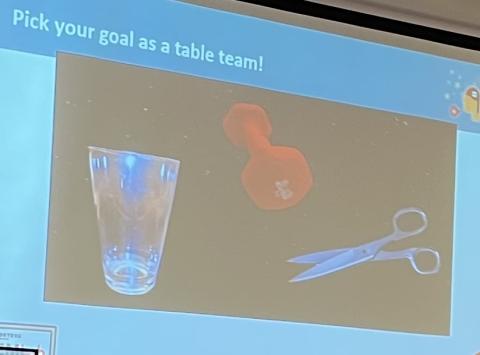
This spring, I had the opportunity to participate in "Out of this World Engineering." After taking a seat in the lab, we watched a brief presentation that reviewed some basics about how gravity differs in space and the effects this can have on even the most mundane daily tasks on Earth. However mundane, certain routines must be maintained while living and working on the ISS, so our facilitated also touched upon the engineering design process and how this may assist us in solving some of the issues faced by astronauts on the ISS each day. The presentation ended with a charge to participants to collaborate at their tables in order to solve one of three problems involving simple daily tasks on Earth that become exponentially more difficult when gravity is changed: exercising to stay in shape, drinking water to stay hydrated, and getting a haircut.
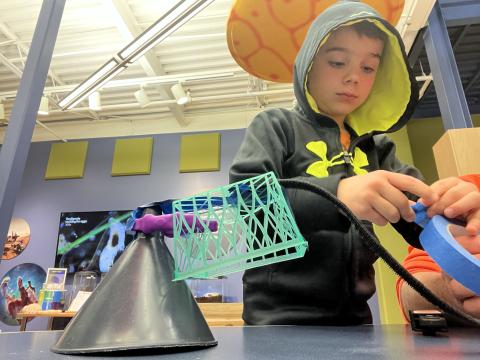
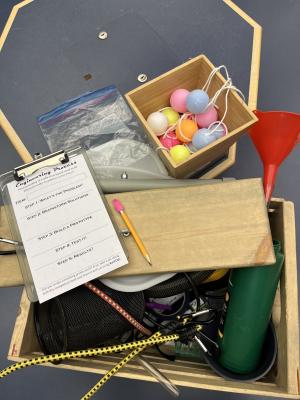
Participants of all ages quickly became invested in solving the design challenges, some even made it their mission to solve more than one. Each group began by scavenging through a box of seemingly random resources at their table, which included items such as berry baskets, funnels, tubing, clips, tape, and other simple supplies. Groups discussed and designed, built their prototypes, and then discussed more in attempts to improve designs. After about 10 minutes, each table had the chance to share their creations to the larger group, making comparisons when tables chose the same challenge and giving feedback on each design.
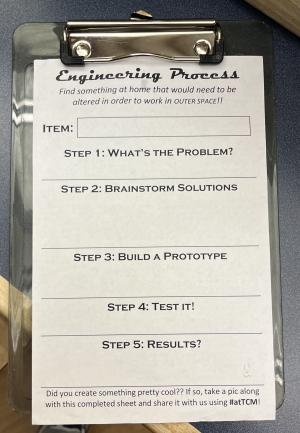
Once everyone had shared their work, the presenter wrapped up by showing the real innovations used on the ISS for each of these very real problems. Participants celebrated having designs close to the real tech being used on the ISS, and felt empowered to continue exploring. A worksheet was provided for participants to take home, with prompts to help them consider other everyday tasks that may be effected by gravity in space and what ideas they have for resolving these issues.
Congratulations to The Children's Museum of Indianapolis for 100 years of igniting joy, wonder, and curiosity through powerful learning experiences! We are honored to have you as a long-time partners of the NISE Network.