
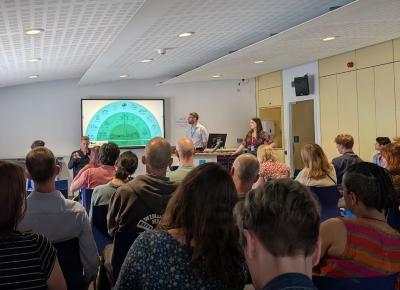
In 2020, We the Curious participated in the NISE Network’s Sustainability Fellowship as a mentor and fellow, hosting a workshop for the program. At the time, our organisation had a goal to become carbon net zero by 2030. Now in 2025, halfway along that journey, we’ve had to revise that target, learning a lot and wanting to share our experience with others on the decarbonisation journey.
We The Curious is a science and arts centre and educational charity in Bristol, England. It is home to the UK’s first 3D Planetarium, and has over 200 interactive exhibits. We produce experiences that bring people together to play, get creative with science and explore different ideas. The centre hosts over 300,000 visitors a year which includes 65,000 school students.
On June 5, 2019, We The Curious became the first science centre in the world to declare a climate emergency, and we were the third organisation in Bristol (following Bristol City Council and the University of Bristol) to pledge to be carbon neutral by 2030. We then nuanced that pledge to be carbon net zero by 2030, meaning we had to reduce all our scope 1, 2 and 3 carbon emissions by 90% or more, and offset the residual emissions, against our 2019 baseline.
Well, shortly after this declaration came the Covid-19 pandemic and then a fire at We The Curious, meaning that much of our sustainability team’s effort was redeployed elsewhere. However, behind the scenes we were still working to establish our carbon footprint and reduce emissions. After we reopened last year (July 2024), we could finally take stock of the data and it clearly told us two things: firstly, that we were on track to be carbon net zero for scopes 1 and 2 by April 2025, and secondly, that there was no way we could plausibly achieve net zero for scope 3 by 2030.
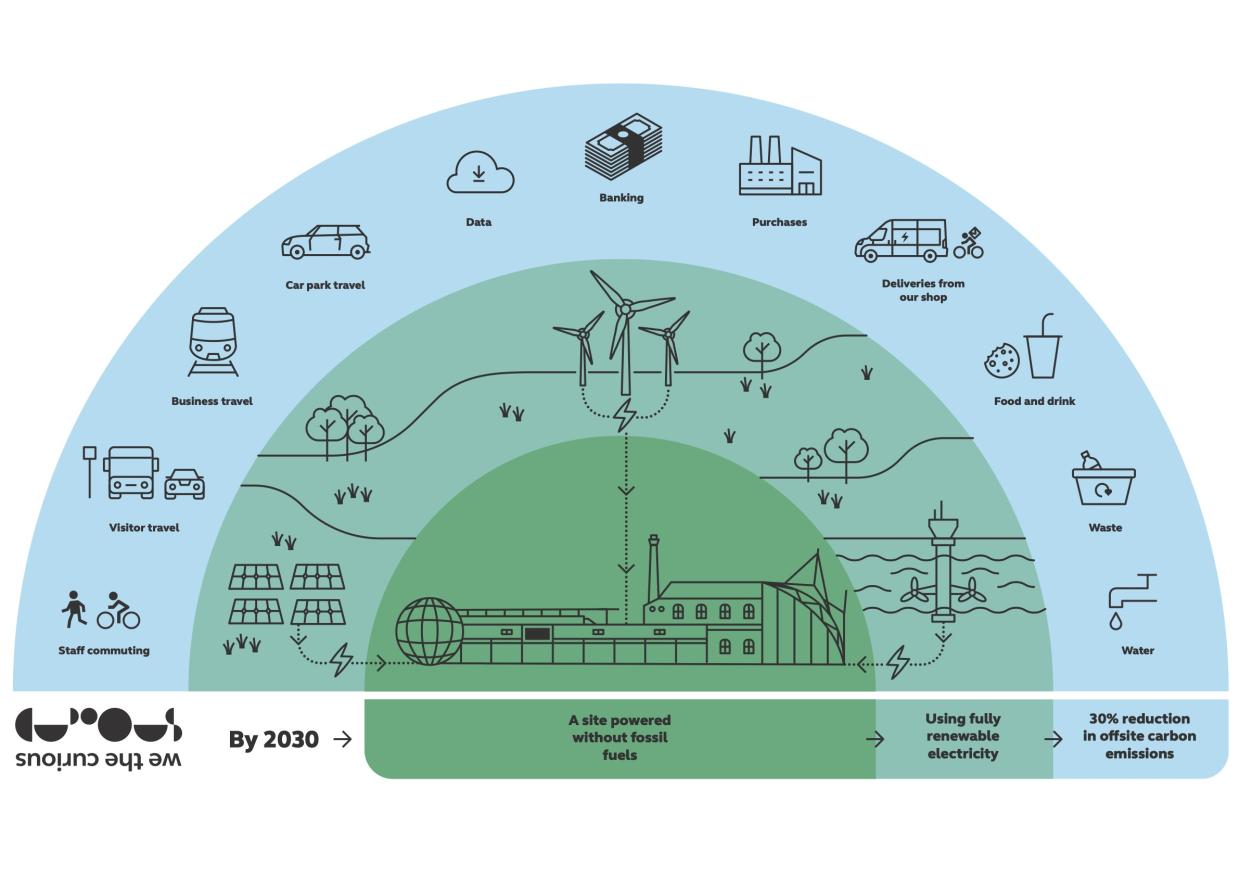
After the realisation that we would not be able to meet our publicised target, we looked at other carbon reduction frameworks and found that either they were not achievable for us or that we couldn’t participate as a charity. So instead, we made the decision to create our own decarbonisation target. We spent a lot of time analysing all our emission sources, modeling what could be achieved within our control and influence, and creating a transparent target with accessible language. The new target we have designed is this: “A site powered without fossil fuels, using fully renewable electricity, and a 30% reduction in offsite carbon emissions by 2030 (against 2019 baseline).”
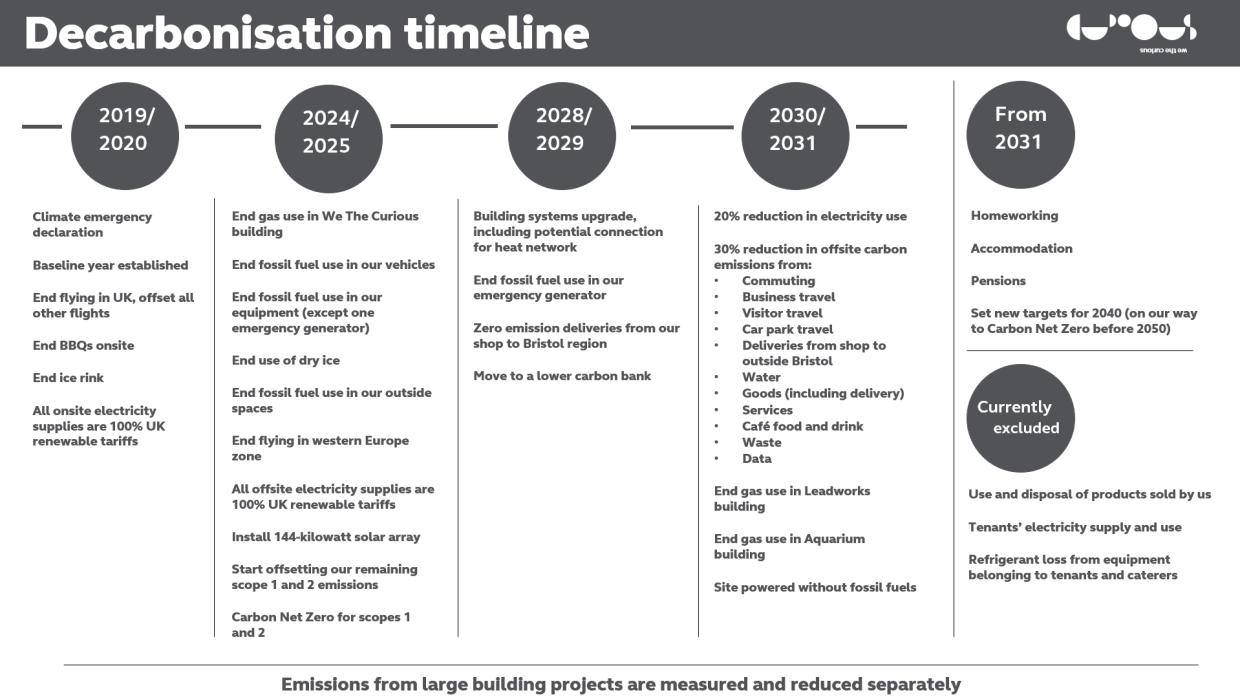
To communicate the details of this target we have created an infographic, accompanied by exact definitions of our target, and a timeline showing what emissions sources are included and, for transparency, excluded (all three infographics can be downloaded and reviewed via the links at the bottom of this page). We have also ensured that our new target aligns with the Science Based Targets Initiative guidance. We released our public comms on the new target back in April, which you can see on our sustainability page and press release.
So, are there any useful learnings in all this? Yes, I think there are three:
- The mission is still the mission, the sustainability team still come to work each day in the mindset of a climate emergency and work hard to understand and reduce our carbon emissions – in that regard nothing has changed.
- We don’t regret making the original pledge to be carbon net zero by 2030, because it means we have achieved bigger emission reductions, marshaled greater resources, and built much better understanding in We The Curious and beyond than we could have hoped for without that strong call to action.
- Decarbonisation is really difficult, unpicking hundreds of years of fossil fueled process and habit is an immense and unmapped challenge, but recognising that makes us more determined than ever.
We’ve been excited to share our experience with others on the decarbonisation journey and sharing our work so far has been such a success that we are now offering consulting services for other centres. If you’d like to learn more about our journey or explore how we can support your organisation, feel free to reach out via our inbox - [email protected]